I. Introduction
In a few months, the Israel-Palestinian conflict has claimed thousands of lives in the region. UN hallways are buzzing with debates on ceasefire with varying (largely ineffective) outcomes. The situation in Gaza does require an immediate and sustainable solution, but it also warrants two critical questions—what contributed to escalating the conflict between Israel and Palestine and who benefited from it? The short answers are weapons and weapon manufacturers. The U.S. Defense Stocks have surged approximately $30 Billion since Hamas attack[1]. Two major US defense contractors: Defense firms RTX (formerly Raytheon) and General Dynamics unapologetically informed their investors that war in Gaza is a ‘win for them’.[2]
Companies like Lockheed Martin, producers of the F-35 Lightning II Fighter jets and Black Hawk helicopters used by Israeli military and Northrop Grumman, producers of submarines and combat vehicles, have seen substantial stock gains in the last three years[3]. In July 2023, Israel even signed a $3 Billion deal with Lockheed Martin for purchase of a third squadron of F-35 jets[4]. It is natural to wonder where does Israel get the economic resources to purchase such sophisticated weapons from the US? The simple answer would be taxpayer money. However, the picture is never so black and white in international relations. In 2016, US agreed to give Israel a $38 Billion military aid package wherein Israel receives military equipment worth $3.8 billion annually from US[5]. As a result, 92% of all weapons in Israel are imported from one country: The United States. In 2022, Israel was also world’s 10th largest weapon exporter with India being its leading recipient[6]. It is possible to see this optimistically as a mere example of economic interdependence and friendly relations between allied countries. However, the history of conflict in the Middle East attests to the inaccuracy of this assumption. While states maybe concerned with alliances, weapons industry only cares about profit maximization. Moreover, often the state needs the weapon industry more than the weapons industry needs the state. This has especially been the case in United States where the defense sector contributes significantly to the US economy and has considerable influence at the legislative level through lobbying. The ripple effects of mass economization of weapons also pose threats within the manufacturing country in the form challenges to law and order and political polarization.
Exploring the above in detail, this essay will delve into the layers of the conflicts in regions such as Gaza an attempt to provide the long answers to the initially posed questions and asses the scale of weapon sale impact in these regions. This paper will also highlight the challenges to restoring peace and reasons for inefficacy of international organizations in stopping wars. Finally, this essay will propose policy measures to facilitate implementation of a Humanitarian-Development Peace Nexus in Gaza to ensure sustained peace and development go hand in hand.
II. Brief History of the Israel-Palestine Conflict
The ongoing conflict between Israel and Palestine is the tale of world’s oldest hatred: the one against Jews[7]. Taking refuge from the repression in Europe, Jews hoped to make a national state in Ottoman, a region dominated by Arabs and Muslims and later colonized by the British. The Arabs objected to giving the territories to Jews, claiming the land as theirs. The Israeli-Palestinian dispute pertains to who owns what land and how it is governed (or controlled). United Nations had intervened by proposing a partition of the land between Palestinian Arab and Jewish with Jerusalem[8]. This plan failed, the two groups fought several more wars and what followed was widespread violence and destruction in the region. The lines on maps we see today essentially reflect the result of two of these wars. Most importantly, the one fought in 1967 which gave Israel control of the West Bank and the Gaza Strip—the two regions with a sizable Palestinian population.
III. The Economization of Weapons and its Role in Escalation and Perpetuation of Conflict
Each conflict is distinct, and its escalation depends on various factors. Yet, it is difficult to rule out the availability of weapons as an insignificant factor. India and Pakistan for instance, have fought four wars over Kashmir, from 1947 to 1999. The last one was fought when both countries were nuclear states. While the initial two wars were a result of British policies, the last two ones were only possible because by 1960s, the US foreign policies favored Pakistan and the US had begun equipping the country with weapons and advanced techniques of military warfare[9]. Kashmir is still a bone of contention between India and Pakistan and diplomatic talks have a track record of failure. Yet, without serious foreign involvement on either side, a full blown war seems unlikely today. This is why China’s close ties with Pakistan is a cause of concern for India.
Unlike ancient times when wars were common over territorial disputes, in modern times, armed escalation of conflict is a rare extremity. While it may be inaccurate to say that conflicts don’t happen; we’re seeing increasing violence all over the world but they’re not as frequent and as extensive as before. Thankfully today, there are many riders for a conflict to turn into World War III. Economization of weapons, however, is not one of them. Due to globalization and technological advancements, not only are sophisticated weapons easily accessible to the remotest parts of the world, but they are also becoming more lethal than before, increasing the risk of extensive destruction. According to the US State Department, in 2022 US exported weapons worth a staggering $205.6 billion with a 49% percent increase from the previous year[10]. Israel also broke record with its defense exports last year, amounting to $12.5 billion[11]. Maintaining a sizeable army with quality weapons is an essential for every country. But these ever increasing weapons exports showcase a shift in trend: the purpose of purchase is no longer self-preservation, or deterrence. Scholars and analysts have been flagging concerns over increasing global arms sales for a while. David Kinsella’s work in this context is significant and relevant. Kinsella claims that nations that have an uninterrupted supply of weapons from numerous countries, are likely to adopt more belligerent foreign policies. This is because of the recipient's increased confidence in its military capability and the likelihood of victory in a potential conflict. This in turn, increases the possibility of the said nation initiating disputes, demanding concessions from its neighbors in these disputes, and escalating the situation if negotiations don't produce a favorable outcome. Analyzing cases of Israel, Egypt, Syria, Iran, Iraq, India, Pakistan, Ethiopia, and Somalia, Kinsella concludes that increased weapons supply dramatically increases the risk of violence and escalation of conflict[12]. My own research also supports this argument. On conducting a time-series, cross-sectional analysis of on anti-satellite (ASAT) weapons from 1956-2022 in order to identify factors behind intensification of global arms race, I found that a) the risk of threat to a country is proportional to the unit of ASATs tested by another country b) the threat increases with increase in ASAT test as more countries start testing ASATs and c) the threat can come back to the initiator country in an inflated form at any point. Escalation of conflict to space is much more dangerous and can have serious human, environmental, national, transnational, and transcultural consequences and I concluded that the culprit for this space race amongst nations is security dilemma amongst powerful or rising nations. To illustrate this, I developed a model (Fig 1) called the ‘Karmic Cycle of Security Threat in Space’:
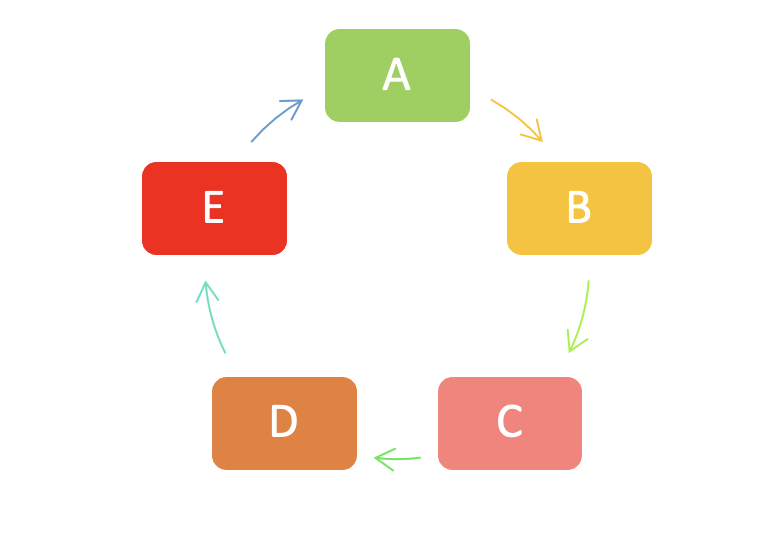
Fig 1: Karmic Cycle of Security Threat in Space
The colors in this model denote the level of global threat from lowest Green (Country A) increasing with Yellow (Country B), Peach (Country C), Orange (Country D) to red signifying the most severe level of threat to global security (Country E). A complete ban on ASAT test and deployment can reverse the colors back to green and restore status quo[13].
Weapons cannot in any way, be a guarantee for sustaining global peace and security and for several reasons, the foremost reason being extremist non-state actors in conflict zones gaining access to lethal weapons. Hamas’ recent attack on Israel included several rockets, missiles, and drones. Where did Hamas get such sophisticated weapons? The short answer is that they were smuggled via tunnels from Iran[14] but the complex answer is that it is possible that US manufactured weapons could have been used in attacks on US bases in Iraq and by Hamas against Israel. On paper, all weapon exports from US to Iran and Iraq stopped after Iran became an authoritarian Islamic regime and Iraq was placed on the list of terrorist-supporting countries. However, according to SIPRI database, US continued to illegally sell arms to Iran between 1984 to 1986[15]. Where’s the guarantee that the US has not continued this practice till more recent years, and it is now facing the threat of its own weapons? In another similar incident from Baghdad, in 2016, a man posted a picture of a ‘worn out’ M4 rifle on Facebook with the intent to sell. This was quickly recognized as one the thousands of M4s that the Pentagon had provided the Iraqi security forces and other militia after overthrowing Saddam Hussein in 2003[16].
Countries may have a foreign policy or ethical responsibility, to not sell weapons to extremist outfits, however once the proliferation of these weapon becomes ubiquitous, it is challenging to stop them from falling in the wrong hands. Moreover, modern weapons are known for their increased lethality and high potentials of extensive damage. Increased demand means no dearth of financial resources. This in turn leads to advancements in technology—in this case, for the worst. In regions like Gaza, these advanced weapons become warrants of death for innocent civilians if any party launches indiscriminate attacks on the other. Economization of weapons also leads to increased security dilemma and an arms race, which as illustrated above, is a serious threat to international peace and order. The arms race can only end if either the demand reduces, or the manufacturer decides to reduce production. The reduction of demand for weapons is dependent on international security conditions stabilizing. That doesn’t seem to be happening, so it is irrational for the recipients to stop buying weapons when a hostile neighbor has more of them. However, if the manufacturer stops producing them, there is scope for conflict to reduce and diplomatic channels to open up due to a scarcity of weapons. But why will the a profit-driven manufacturer curtail the sales, especially when the global demand is at an all-time high? As a result of this profit-driven strategy, conflicts may be created and sustained, since arms-producing countries have financial motivations to keep supplying weapons to conflict zones, regardless of the humanitarian repercussions and in turn, increasing the rising risks of global instability. Finally, economization of weapons leads to a prioritization of military resources over social and infrastructural development initiatives. Gaza, Syria, and Afghanistan are examples of such diversion of resources, subsequently worsening economic challenges and quality of life in these regions.
IV. The Contradiction of Weapon Sales and Foreign Policies
It is clear that if conflict increases, the weapons industry benefits. While economic crises plague conflict zone, economic growth and job creation is seen in the countries that produce and export most weapons. On paper, state decisions show commitment to avoiding conflict and not providing arms to hostile nations but the widespread availability of weapons in the open market narrates a different story. In the US, decisionmakers often focus on sending military packages or exporting weapons to countries with common strategic or security interests. The economization of weapons is even seen as a ‘valuable tool of foreign policy’ in ‘strengthening military capabilities of allies’ and ‘leveraging behavior of recipients’ towards regional stability and cooperation[17]. However, the foreign policies and international commitment of states don’t always align with the economic considerations of the weapons industry. In capitalist nations like the US, economic considerations can be decisive factors in determining the arms sales[18] as leaders are well aware that increase in arms sales will lead to more job creations for Americans[19] as evidenced by Trump’s rationale behind a major deal with Saudi Arabia[20]. After 9/11, it would seem logical (and necessary) for the US to ban all weapon exports to Pakistan. However, in 2022, the US approved a $450 million military package for Pakistan including F-16 fighter jets and other weapons to “maintain Pakistan’s fleet and helping combat terrorism”. It seems that economic considerations are prioritized and then a narrative based on foreign policy is developed to justify the sales somehow.
In 2022, US weapons were purchased by 58 different countries including Israel, Lebanon, Saudi Arabia, Qatar, Kuwait, UAE, Bahrain, and Iraq. How many of these align with USA’s strategic interests or help counter terrorism? While US is highlighted more in this context for obvious reasons, the lack of alignment with foreign policies and weapon sales can be seen everywhere. 24% of weapons from Israel’s record sale in 2022 went to Arab nations[21]. Russia also exemplifies this trend. India and Russia are considered close allies. However, Russia is one of Pakistan’s top three arms exporters.[22] Despite the growing unease in India and its long standing alliance with the country, Russia has ‘pledged’ to provide special military equipment to Pakistan and even plans to hold bilateral military exercises and in the mountains and the Arabian Sea[23].
In his first public statement about the Israel-Palestinian war, President Putin said that the condition showcases the failure of US foreign policy in the region and asserting that US has neglected the interests of the Palestinians[24]. China too condemns Israel’s actions in Gaza, characterizing them as ‘beyond self-defense’[25]. Considering these statements, it seems like US-Israel are on one side of the issue and Russia-China are on the other side. However, when it comes to exports of weapons, there are all on one side: that of profit. The traditional norms of alliances and commitment to certain values don’t apply to the sale of weapons as the weapons industry doesn’t care about foreign policies, security risks, or alliances. The rising populism in the world has further worsened this situation. In analyzing a range of factors from strategic, economic and risk factors, Thrall, Cohen and Dorminey find that risks are rarely affect the sales of weapons. They also highlight that since 2001, US has taken increasingly more risks by supplying arms to non-democratic nations or countries with a poor history of human rights[26].
V. The Inefficacy of International Organizations
If profit maximization by private defense contractors and the weapons industry overall, is increasing threats to global peace and security, it is then essential to ask: why are international organizations ineffective in reducing these arms sales? The answer is self-preservation.
In the list of world’s top ten largest arms exporters, US holds the top spot with a global sale of 40% followed by Russia, France, China, and United Kingdom[27]. What is interesting about these five countries is that they are also permanent members of the United Nations Security Council (UNSC). The arms sales by the top five-arms exporters alone, account for over three-quarters of the global arms trade. The weapon sales by the five permanent members of the UNSC constitute for over 75% of the global arms export[28]. Why would the UN then, pass a resolution to curb global arms export? It is ironical that these nations express concerns over the several ongoing conflicts in the world, when it is their weapons which are escalating those conflicts in the first place and leaving the survivors in a cycle of poverty.
Organizations like the UNSC have become ivory towers that are losing value. Besides prioritization of national interests, several other factors are also responsible for their decline.
First, the UN does not have sufficient resources or enforcement mechanisms of its own which could guarantee global peace and order, assertively. UN’s economic reserves are essentially donations by the most powerful countries like the US. The reason US is able to provide these donations is majorly because of the profits from defense industry bolstering its economy. This leads to lack of opposition from the UN to clearly risky US arms sales. Moreover, the most powerful countries within the UN are also often the aggressors outside. Their power to dominate decisions concerning conflicts wherein they have a direct stake is naturally not going to improve anything. Recently, in his address at the UN General Assembly, Ukraine’s President Volodymyr Zelenskyy said that “veto in the hands of the aggressor is what makes the UN dead”.[29] This could be countered by decentralizing the power within the UN and opening doors for more countries to be part of decision making, especially at the UNSC. But the scope of other states securing a permanent seat in these rooms is minimal. India for instance has been asking for a seat on the table for years after Nehru unwittingly gave up the country’s seat to China. Giving India a seat on the table would be a good counter to China and favorable to both US and Russia as India has good bilateral relations with both and is of strategic importance to both these countries.
VI. Impact of Weapon sales on Civilian Population, Internal Security, and Order Domestically
It is natural that such staggering weapon sales will contribute to escalating conflict in an already fragile region, but it also has negative consequences within the country manufacturing these. GDP growth and employment opportunities are only one side of the coin. The other side is increase in gun violence and mass shootings.
No discourse on gun violence in the world is complete without a mention of US. The frequency of mass shootings and incidents of gun violence in the US is alarmingly higher than others. In 2021-22, there were 327 of only school shootings, 188 of which ended in some form of casualty[30]. This is tragic a negative consequence of weapons proliferation. In the list of top 100 weapon companies in the world, 51 are American[31]. Naturally, firearms will be extensively available domestically in the US, both legally and illegally. Besides, the powerful influence of interest groups such as NRA has led to formation of relatively relaxed laws for purchase and sale of weapons. This makes for a lethal combination and a nightmare for internal security.
There were also cases of shooting in Australia, but the response was different, primarily because weapons don’t contribute to the economy the way they do in the US and the weapons industry does not hold the same influence over legislature. With increase in instances of mass shootings, Australia quickly tightened the laws. The sale and importation of all automatic and semi-automatic rifles and shotguns were prohibited. All citizens were required to demonstrate a genuine cause for owning weapons and then wait 28 days before being able to purchase a firearm. Most importantly, a vast, obligatory gun-buyback was announced. The Australian government confiscated and disposed of approximately 700,000 weapons, drastically slashing the number of gun-owning households to half[32].
Moreover, almost none of these are defense companies in US are state owned and, so the money earned from weapon sales flows directly into the coffers of these private entities. However, when they want to buy weapons, the state funds those acquisitions through the American taxpayer’s money. Billions of dollars of taxpayer money are funneled into these private companies worldwide, continuing the cycle of conflict and violence in the world. This money could be utilized for health and education reforms or tackling the widespread homelessness and drug trade in the US.
VII. The Way Forward
To counter the extensive proliferation of weapons in the world, especially in conflict zones and the subsequent diversion of resources from development initiatives, there is a need to create a Humanitarian-Development Peace Nexus for conflict zones such as Gaza.
Gaza has historically faced grave hurdles to development, like incessant violence, weak economic standing, and overall, a fragile humanitarian situation. It is essential to mitigate ongoing crises, reduce the impact of past ones and prevent future conflict from happening by strengthening a region socially, politically, and economically. The idea of a humanitarian-development peace nexus is to ensure urgent humanitarian needs are met efficiently while sufficient attention is also being paid to long-term development and sustained peace. This framework, as proposed by the UN, has four essential components: humanitarian, development, peace-building and disarmament or demilitarization. Once humanitarian needs such as medical supplies, food and other necessities have been arranged and a channel has been developed for these to reach the most vulnerable of populations, the next step is to roll out developmental initiatives. These include long-term plans for socio-economic stability and growth such as focusing on education, skill development, employment opportunities or health care. For peacebuilding efforts to be successful, the most important factor is promoting community engagement. Steps to involve local leaders and community members can also help reduce polarization, violence, and even help with demilitarization in these regions. Lastly, peace-building efforts can include opening diplomatic channels to resolve conflicts with dialogues and seek international cooperation in reducing the influx of weapons in vulnerable regions.
[1] Saul, D. (2023, October 11) ‘U.S. Defense Stocks Surge Nearly $30 Billion After Hamas Attack—Don’t Count On It Lasting, Analysts Say’. Forbes. URL: https://www.forbes.com/sites/dereksaul/2023/10/11/us-defense-stocks-surge-nearly-30-billion-after-hamas-attack-dont-count-on-it-lasting-analysts-say/?sh=3770bad100ee
[2] Perez, A. et al. (2023). ‘Military Contractors Are Framing the Israeli War on Gaza as a Win for Investors’. Jacobin. URL: https://jacobin.com/2023/10/raytheon-general-dynamics-gaza-israel-war-military-industrial-complex#:~:text=Two%20of%20America%27s%20largest%20defense,enough%20to%20meet%20additional%20demand.
[3] Carlson, G. (2023, October 13). ‘However the Israel-Hamas war ends, there is one big winner: the defence sector’. The Globe and Mail. URL: https://www.theglobeandmail.com/business/commentary/article-israel-hamas-war-defence-stocks-sector/
[4] CNBC
[5] Spetalnick, M. (2016, September 15). ‘U.S., Israel sign $38 billion military aid package’. Reuters. URL: https://www.reuters.com/article/us-usa-israel-statement-idUSKCN11K2CI/
[6] The Times of Israel. (2022, April 04). Israel ranked world’s 10th largest weapon exporter in the past five years’. URL: https://www.timesofisrael.com/israel-ranked-worlds-10th-largest-weapons-exporter-in-past-five-years/
[7] Yasin, S. (2023). Comp Exam Major, CSULB
[8] UN. ‘The Question of Palestine’. History. URL: https://www.un.org/unispal/history/
[9] Roy, Kaushik (2014). India-Pakistan Wars. obo in Military History. doi: 10.1093/obo/9780199791279-0145
[10] Stone, M. (2023). ‘US arms export rose 49% in Fiscal 2022’. Reuters. URL: https://www.reuters.com/world/us/us-arms-exports-up-11-fiscal-2022-official-says-2023-01-25/
[11] Reuters. (2023) ‘Israel reports record $12.5 billion defence exports, 24% of them to Arab partners’. URL: https://www.reuters.com/business/aerospace-defense/israel-reports-record-125-bln-defence-exports-24-them-arab-partners-2023-06-13/
[12] Kinsella, D. (1998). Arms Transfer Dependence and Foreign Policy Conflict. Journal of Peace Research, 35(1), 7-23. https://doi.org/10.1177/0022343398035001002
[13] Yasin, S. (2022). ‘War in the Skies: A Quantitative Assessment of the Frequency for Testing Anti-satellite Weapons’ IAPSS World Congress. Canada.
[14] Lendon, B. (2023). ‘How does Hamas get its weapons? A mix of improvisation, resourcefulness, and a key overseas benefactor’. CNN. URL: https://www.cnn.com/2023/10/11/middleeast/hamas-weaponry-gaza-israel-palestine-unrest-intl-hnk-ml
[15] SIPRI Arms Transfer Database: ‘Top Arms Exporters to Iran 1950-2015’. Trend-indicator value (TIV). https://www.sipri.org/databases/armstransfers; Alternatively, see https://theworld.org/stories/2016-06-01/where-did-iran-get-its-military-arms-over-last-70-years
[16] Chivers, C.J. (2016). ‘How Many Guns Did the U.S. Lose Track of in Iraq and Afghanistan? Hundreds of Thousands’. The New York Times. Notebook. https://www.nytimes.com/2016/08/23/magazine/how-many-guns-did-the-us-lose-track-of-in-iraq-and-afghanistan-hundreds-of-thousands.html
[17] Yarhi-Milo, K., Lanoszka, A., & Cooper, Z. (2016). To Arm or to Ally? The Patron’s Dilemma and the Strategic Logic of Arms Transfers and Alliances. International Security, 41(2), 93. https://doi.org/10.1162/ISEC_a_00250
[18] Krause, V. (2004). Hazardous Weapons? Effects of Arms Transfers and Defense Pacts on Militarized Disputes, 1950–1995. International Interactions, 30(4), 349–371. Hartung, W. D. (2012). Prophets of War: Lockheed Martin and the Making of the Military Industrial Complex. New York: Nation Books. Pierre, A. J. (2014). The Global Politics of Arms Sales. Princeton: Princeton University Press. Yarhi-Milo, K., Lanoszka, A., & Cooper, Z. (2016). To Arm or to Ally? The Patron’s Dilemma and the Strategic Logic of Arms Transfers and Alliances. International Security, 41(2), 93. https://doi.org/10.1162/ISEC_a_00250.
[19] Thrall, A. T., Cohen, J., & Dorminey, C. (2020). Power, Profit, or Prudence? US Arms Sales since 9/11. Strategic Studies Quarterly, 14(2), 100–126. https://www.jstor.org/stable/26915279
[20] White House, “Statement from President Donald J. Trump on Standing with Saudi Arabia,” press release, 20 November 2018, https://www.whitehouse.gov/.
[21] Reuters. (2023) ‘Israel reports record $12.5 billion defence exports, 24% of them to Arab partners’. URL: https://www.reuters.com/business/aerospace-defense/israel-reports-record-125-bln-defence-exports-24-them-arab-partners-2023-06-13/
[22] Wezeman, P.D., Gadon, J., Wezeman, (2022) S.T. ‘Trends in International Arms Transfers’. SIPRI. URL: https://www.sipri.org/sites/default/files/2023-03/2303_at_fact_sheet_2022_v2.pdf
[23] Bhaumik, A. (2021) ‘Russia Pledges to Give More Military Equipment to Pakistan’. Deccan Herald. URL: https://www.deccanherald.com/world/russia-pledges-to-provide-more-weapons-to-pakistan-despite-unease-in-india-971616.html
[24] The Moscow Times. (2023, October 11) ‘Putin Says US Foreing Policy Failure Behind Israel-Hamas War’. URL. https://www.themoscowtimes.com/2023/10/10/putin-says-us-foreign-policy-failure-behind-israel-hamas-war-a82721
[25] Tan, C. (2023, October 15). ‘China says Israel’s actions in Gaza are ‘beyond self-defense’ as U.S. races to avert wider conflict’. CNBC. URL: https://www.cnbc.com/2023/10/16/china-says-israels-actions-in-gaza-have-gone-beyond-self-defense.html#:~:text=“Israel%27s%20actions%20have%20gone%20beyond,bin%20Farhan%20Al%20Saud%20in
[26] Thrall, A. T., Cohen, J., & Dorminey, C. (2020). Power, Profit, or Prudence? US Arms Sales since 9/11. Strategic Studies Quarterly, 14(2), 100–126. https://www.jstor.org/stable/26915279
[27] Wezeman, P.D., Gadon, J., Wezeman, (2022) S.T. ‘Trends in International Arms Transfers’. SIPRI. URL: https://www.sipri.org/sites/default/files/2023-03/2303_at_fact_sheet_2022_v2.pdf
[28] Oxfam International. (2023, May 22). ‘Top five arms exporters hit yearly sales of $85 billion as 9,000 people die from conflict-driven hunger every day. URL: https://www.oxfam.org/en/press-releases/top-five-arms-exporters-hit-yearly-sales-85-billion-9000-people-die-conflict-driven#
[29] UN General Assembly. (2023, September 19). His Excellency Volodymyr Zelenskyy President URL: https://gadebate.un.org/en/78/ukraine
[30] The Guardian. (2023, September 14). ‘US school shootings double in a year to reach historic high’. URL: https://www.theguardian.com/education/2023/sep/14/us-school-shootings-record-rise-dramatic
[31] Béraud-Sudreau, L., Liang, X., Lopes da Silva, D., Tian, N., & Scarazzato, L. (December 2022). Top 100 Arms-producing and Military Services Companies, 2021 SIPRI. https://doi.org/10.55163/VYJC8517
[32] CNBC. (2022) ‘What can Australia's reaction to a mass shooting teach us about guns and gun control?’ URL: https://www.cbsnews.com/news/what-can-australias-reaction-to-a-mass-shooting-teach-us-about-guns-and-gun-control/
