War in the Skies: Quantitative Assessment of the Frequency for Testing Anti-satellite Weapons
Abstract
What may have been wishful thinking once, is a reality today. The miraculous degree of technological advancements like artificial intelligence have modified our understanding of what is normal. It has also changed the course of human development. Yet, the extreme use of technology to rationalize state security can be dangerous. Global arms race has reached space and soon war will, too. The consequences of this will last and reverberate in social, political, and economic landscape of the world for years to come. Space conflict of today includes the use of anti-satellite weapons (ASATs) which can significantly intensify border conflicts due to their kinetic (physical destruction) and non-kinetic (cyber) capacities in space. Besides, ASATs are known to create space debris, can cause irreversible harm to innocent communities due to misfiring or miscalculations of targeted attacks and can lead to the prioritization of defense over education and healthcare within countries, as security dilemma continues to inflate. By conducting a time series, cross sectional analysis of the frequency of ASAT testing by Soviet Union, Russia, USA, India and China, this study hopes to provide an answer to what factors lead to an increase or decrease in the ASAT testing for this specific set of countries. In doing so, the paper also assesses the impact of space wars and the use of ASATs on international conflicts, economy, geo-politics, and the social landscape. This study also highlights the international legal frameworks for space defense (or lack thereof) and provides policy recommendations for sustaining peace by limiting commercialization of space and deflating the security dilemma complex.
Keywords
Anti-Satellite Weapons (ASATs), Conflict, Peace, Space, Technology
Introduction
Geopolitics has always been a network of delicate ties, but it has managed to endure thus far. In recent times however, the pressure on these ties has increased (and alarmingly) due to technological development, especially in the field of defense. Globalization and the resulting advances in technology have brought the world closer through an exchange of culture and knowledge and allowed for the use of space for commercial and exploratory purposes, but technology is a dual sided sword. Nano bots for example, can be used to treat cancer but can also be engineered as a genetically oriented bio-weapon targeting certain races. It is natural that the advancements in technology have strengthened military powers across the world, but on the other hand, has stirred a serious security dilemma in nations. The insecurity so triggered, has caused the already disturbing pace of arms race to reach space.
The Soviet Union commenced a competition to conquer space by launching Sputnik 1 in 1957, USA quickly responded with Explorer 1 in 1958 and Bold Orion in 1959. Things remained relatively steady until China entered the space arms race in 2007 and since then, many countries have joined the race for space domination. Initially, for countries like USA and India, the predominant reason to develop space technology was the ability to defend rather than compete but that changed quickly as more satellites with advanced technology continued to develop. Currently, over 50 nations are actively investing in space technology programs for security purposes and this number is only expected to grow, increasing the risk of conflicts and clashes in space. Once a no-man’s land, space has now become a contested area and a resource to be exploited and dominated[i]. This can be catastrophic if left unchecked and therefore, warrants the need to further evaluate the escalation.
The use of anti-satellite weapons (ASATs) in space marks a new age of sophisticated weapons but also alleviates the stake of impacts. Unlike ground warfare where impact is limited to a region more often than not, space warfare is different. Atomic bombs on Hiroshima and Nagasaki caused tremendous setbacks to Japan, but the impact did not cause threat to the functionality of life on a global scale. Of course, the radiation impacted a far larger area than the target, but anti-satellite weapons are a notch above the worst impacts of ground warfare. They can have irreversible, unlivable consequences for the entire world, the most significant being the Kessler Earth Syndrome caused by debris left in orbits as a result of anti-satellite use[ii]. ASATs can cause radiation, severely threaten navigation abilities of GPS devices in cars, ships and aircrafts, accurate weather predictions and communication globally[iii]. Moreover, the exploitation of space for defense will also escalate more crises into wars. It is, therefore, imperative to indulge in discourses on the effects of advancing technology through ASATs and space warfare to be able to reevaluate their utility and also pave way for mitigating the situation, globally.
The central theme of this paper is to assess the effects of security dilemma through an arms race in space, by specifically studying the testing of anti-satellite weapons and examining factors that could potentially increase or decrease their use. This can help provide an insight into how security dilemma can strain geo-political relationships in the future and affect the global security in general. While the sample size for this study is limited to 5 countries, future studies in this field are crucial not only from a state-preservation view but also to understand the scope of technology in modern times and the macro consequences it can have on our survival as a species.
Literature Review
Conflict threat assessment and causes of war are widely studied topics. However, space conflict and specifically the research on anti-satellite weapons is still an evolving area. The research conducted in this realm is speculative or interpretative. Studies specifically focusing on the frequency of ASAT tests is an even narrower field in security studies. Therefore, the literature on this topic is limited but significant in terms of the assessment and analysis put forth. Whether or not directly addressing the frequency of ASAT tests, a broad theory emerging from majority of literature in this area is: the development and eventual testing of ASAT by one country causes a chain reaction of more countries following, fueling the security dilemma further. This means the potential threat for conflict could keep rising with more countries growing their space programs.
The race to space may seem like a recent phenomenon but that is untrue when tested in a historical context of power acquisition. The only new aspect is the sudden increase in the development and testing of ASATs. Gottfried and Lebow[iv] assess the risks of ASATs in the cold war era and retrace the first ASAT deployment in the world by Soviet Union, quickly followed by the US. Their theory formed in the context of cold war and states that the existence of ASAT has a positive relationship with the frequency of ASAT use. The authors found that ASATs possess a considerably greater capacity for transforming a crisis into a war, and for enlarging wars, than they do for assisting in military and civilian functions. Therefore, they conclude that first, mutual vulnerability would enhance mutual deterrence; restraint and fear of escalation could also encourage restraint. Simply put, the most serious threats to security are actions taken because of the existence of ASAT capacity in one country, giving rise to a security dilemma in others such that a crisis becomes war, creating a vicious cycle. Second, in their analysis from the cold war era, they also found that neither the US nor Soviet Union were likely to use ASAT in short term (during the war) as ASAT models of the time, didn’t offer much of military advantage. Such a comparison between all ASAT capable countries in modern times wouldn’t give the same findings as modern ASAT are equipped with highly sophisticated features especially for military advantage. In the long term however, the authors find that temptation to use ASAT will be greater which we can conveniently say has been proven true. A third finding indicates that a combination of advanced ASATs with greater dependence upon satellites will create strong pressures to use them as weapons. To avert the hazards of escalation of threat, the authors recommend containing the growth of ASAT on both sides (US and Soviet Union) through arms control. This conversation is relevant, and the findings can be generalized in modern context of the multitude of countries joining the race.
Cordesman and Kendall[v] approach the topic in context of US and China to investigate the impact of ASATs on space militarization and warfare globally. They highlight the arms race between US and China which peaked after China entered the field of space warfare in 2007 and explain how an attack could lead to severe responses by the weaker party, such as use of nuclear weapons. Like Gottfried and Lebow, they too establish security dilemma’s significant role in fueling the risk of space warfare through building aggressive ASAT programs. The authors use a quantitative data set including figures on China’s active satellite capabilities, China’s ASAT tests from 2015-2014, assessment of China’s Satellite Launch Trends from 2010-2014, comparison of US-China space launches and classification of US Satellites. The authors also look at US-China relationship to seek an answer for expansion of war. Their theory is that China’s ‘informationization’ of war is the cause for arms race between the two countries which is destabilizing the space. Studying the factors in driving China’s space program, the authors offer other possible explanations for expansion of war to space including security and intelligence gathering, establishing regime legitimacy at home and abroad and maximizing regional influence. These authors in some ways, advocate for Benjamin Franklin’s political thought of reason[vi] and their findings indicate that China’s sophisticated space program represents a shift towards “informationized” wars and that the United States is at a disadvantage in facing China’s space capabilities. The authors note that while the US puts great value on maintaining space dominance, the weaker party may still gain an advantage in launching an ASAT attack since conventional deterrence doesn’t work the same way with space warfare. This will be an interesting aspect to examine in a few years, as USA recently banned all ASAT tests.
Triezenberg[vii] agrees on the dilemma so discussed but explains the factors for war expansion differently. Her theory is that a) sentiments can deter or expand war, b) promotion of peaceful behavior in space through norms and rules increases the political stigma of space and c) powerful countries with less to lose and more to gain are more likely to expand territorial wars to space. She marks sentiments as a driving force in changing the offensive/defensive balance of power and in doing so, highlights the political and psychological consequences of developing, expanding, and using programs such as ASAT for military purposes. She finds that sentiments matter and how states feel about their position in the status quo has a bigger effect on security outcomes than rational factors. A second observation she makes is that encouraging behavior norms towards peaceful use of space promote the political stigma of space desirability and thus increase the risk of conflict. Weakening the political stigma could help deter attacks. A third finding was that the states with less to lose and more to gain are more likely to take a ground war to space.
Peperkamp[viii] found that while the weaponization of space is happening fast, it has not reached the level of an arms race yet. A second finding for Peperkamp was the existence of a gap between the spirit of the law and state use of the space as a militarized area, which needs to be regulated.
Chow[ix] is the only exception to this line of thought. Chow’s analysis highlighted that space stalkers are a real threat and the only way to avoid a ‘space pearl harbor’ is to use ASAT to combat the space stalkers. He focuses less on passive prevention and more on capacity building for retaliation in space via ASAT development. His theory is that legitimizing ASAT attack on a stalker satellite will make space a safer space for the effective use of non-harmful satellites. He claims that the use of ASAT is justified in self-defense against countries that have stalker satellites with capacity to threaten the national interest of others. He focuses on US and China, but it may be worthwhile to explore how his self-defense theory may affect the frequency of ASAT test globally considering countries that are not historically etched aggressive or first strikers.
This paper reiterates a combination of arguments presented in these studies and builds on them, going further from a state-preservation view to assessing the scope of technology in modern times and the macro consequences it can have on our survival as a species. This was particularly well expressed in Rodhan’s[x] work concerning the 5 dimensions of global security----human, environmental, national, transnational, and transcultural. Keeping these in mind, I have developed a model (Fig 1) called the ‘Karmic Cycle of Security Threat in Space’.
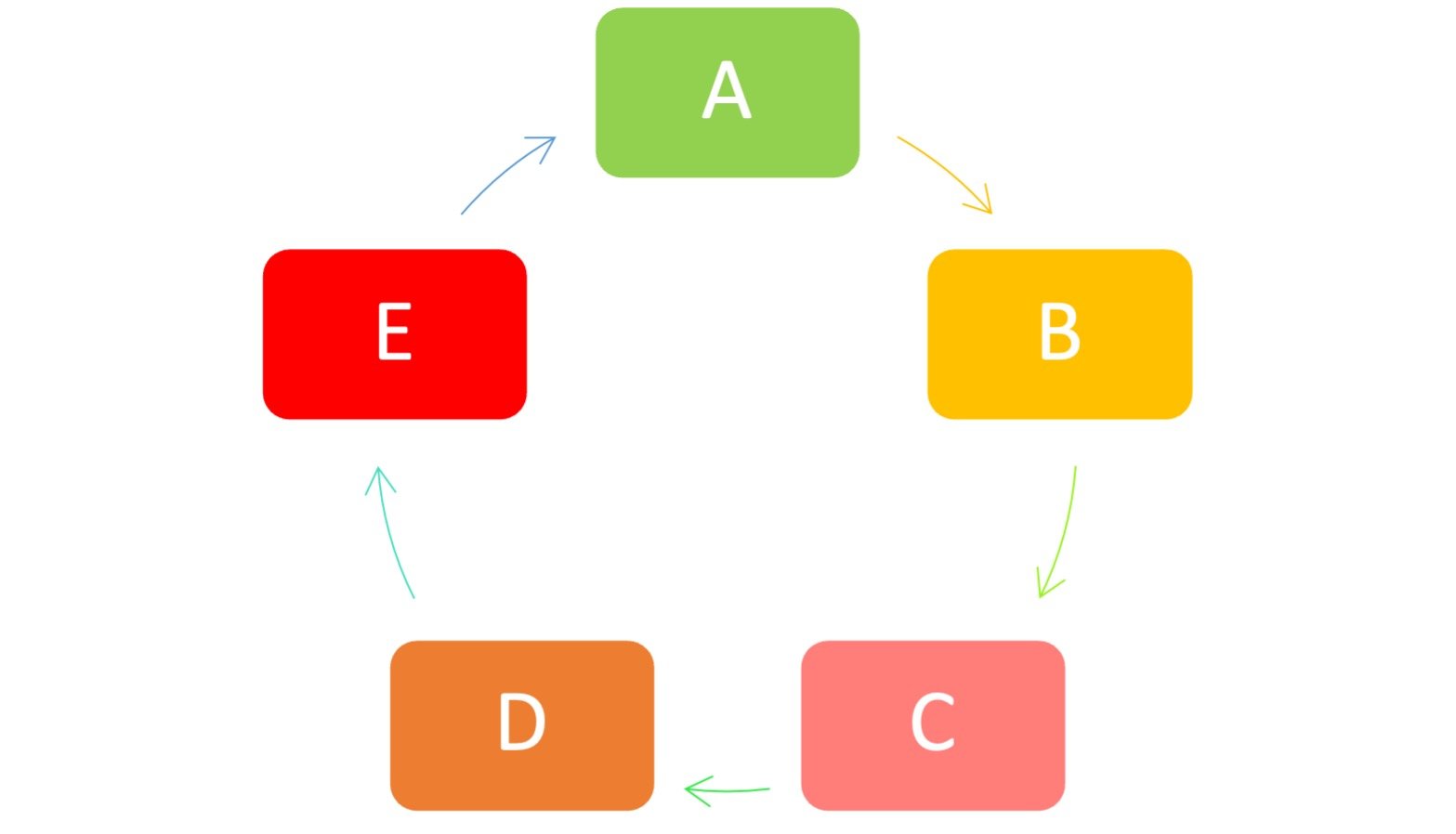
Fig 1: Karmic Cycle of Security Threat in Space
This model suggests that a) the risk of threat to a country is proportional to the unit of ASATs tested by another country b) the threat increases with increase in ASAT test as more countries start testing ASATs and c) the threat can come back to the initiator country in a more advanced and inflated form at any point. The colors in this model denote the level of global threat from lowest Green (Country A) increasing with Yellow (Country B), Peach (Country C), Orange (Country D) to Red signifying the most severe level of threat to global security (Country E). A complete ban on ASAT test and deployment can reverse the colors back to green and restore status quo. This will be possible to examine in a few years as the possibility of ASAT test ban has showed some signs in 2022 but many countries have refused or abstained from this ban[i].
Conceptualization
To understand the scope of their threat, it is first important to understand what Anti-Satellite weapons (or ASATs) are and how they are different from other satellites. ASATs are advanced satellites launched solely with the purpose of destroying or damaging other satellites. There are two types of ASATs—kinetic and non-kinetic. Kinetic ASATs are co-orbital satellites and are designed to trail next to target satellites before detonating, blowing it up with them. Whereas non-kinetic ASATs cause destruction by uploading cyber malware, jamming, laser-blinding, spying on other satellites for information or rendering them useless. Both kinds of ASATs can be dangerous as many satellites have dual uses-- civil and military.
The theory here is that increasing number of ASATs has a direct positive correlation with security dilemma. Continuing ASAT tests will make it necessary for more countries to advance their space programs and develop and launch more ASATs for security reasons. There is no way to ensure an ASAT will only be used for defense and not attack.
The set of variables includes for this study includes—
- Independent variables: Ongoing conflict in a country, the defense expenditure of a country, number of ASAT capable satellites in a country, regime type and arms race in a country at a given point.
- Dependent Variable: ASAT Test Frequency (ASATs has only been deployed once in a conflict till date. They are still in test-stages across the world therefore, ASAT test has been taken as a dependent variable instead. This could very well change in the near future)
With this theory in mind, following hypotheses are tested:
A country’s involvement in conflict, directly or indirectly at any given point should show a positive correlation with its ASAT test frequency.
Countries that have more defense expenditure should conduct more ASAT Tests.
Countries that have more ASAT capabilities should show an increase in ASAT Test frequency.
Regime type and ASAT test frequency should show a correlation; some regimes such as closed autocracy are more likely to test ASATs compared to others.
[1]Arms race and ASAT test frequency should show a correlation; a country being involved in arms race at any point show also mean the country will be testing more ASATs.
Methodology
This study deploys a quantitative approach for understanding the impact of ASATs on increasing security dilemma globally. This includes assessing factors responsible for increase in ASAT test frequency in a time-series, cross sectional analysis of Soviet Union, Russia, USA, India, and China from 1956[2] to 2022. Descriptive statistics, bivariate and multivariate analyses have been done on the set of variables to assess correlation and significance.
Data
The dependent variable (ASAT test frequency) and independent variables--Conflict, Defense Expenditure and ASAT Capable Satellites are treated as scale whereas independent variables: Arms race and Regime type are categorical and recoded as:
Arms Race in a country in any given year: Yes = 2; No = 1
[3]Regime Type in a country in any given year: Closed autocracy = 0, Electoral autocracy = 1, Electoral Democracy = 2 and Liberal Democracy = 3. In the multivariate test, closed autocracy has been excluded for analysis and regime type 1, 2 and 3 are recoded as such.
The cases in this study comprised of 5 countries including: Soviet Union, Russia, USA, India, and China. Each of these countries were studied under the listed variables from 1956 to 2022 amounting the total number of cases to 268. These set of countries was chosen for two reasons. First, they marked Soviet Union (later Russia) and USA marked the beginning of space race and secondly, the timings of their ASAT launches matches with one another indicating a possible evidence of security dilemma. Same is the case with China and India. Until China joined the space race in 2007, India was nowhere on the space map.
The data used in this study is sourced as following:
- Published government records or official announcements from defense ministries of different countries or their space agencies (NASA, ESA, ISRO, ROSCOSMOS)
- Published papers in peer reviewed journals
- Databases on satellite programs such as the Union of Concerned Scientists (UCS) Satellite Database
- International organization reports such as the UN, Stockholm International Peace Research Institute (SIPRI), V-Dem Institute, Secure World Foundation and Centre for Strategic International Studies
- Council on Foreign Relations’ interactive conflict tracker tool
- Infographic analysis from Visual Capitalist
Analysis and Findings
It is no secret that the face of global security mechanisms changes with time and evolution of man and technology. What is notable, however, is how fast this face has changed in the past 10-12 years compared to the years before. This study found that the space arms race which has reached a deadly level today, did in fact begin in 1957 with Soviet Union’s launch of Sputnik and USA quickly responding with two satellites in two consecutive years. Similarly, India entered the race only after China tested its first ASAT in 2007; prior to that India didn’t show any signs of interest in the space race. What we see today is a macro level realization of Sun Tzu’s wisdom—"securing yourself before offending another”[ii]. What may have started as a defense mechanism for nation states, has become a means to display power and preparedness for attack over time.
In order to draw an eloquent picture of the relationships between variables, we must look at the statistical analyses for each of the independent variables with the dependent variable (no. of ASAT tests) through univariate, bivariate and multivariate models.
1. Univariate descriptive statistics of DV and key IVs
a) DV & IV #1 Arms race
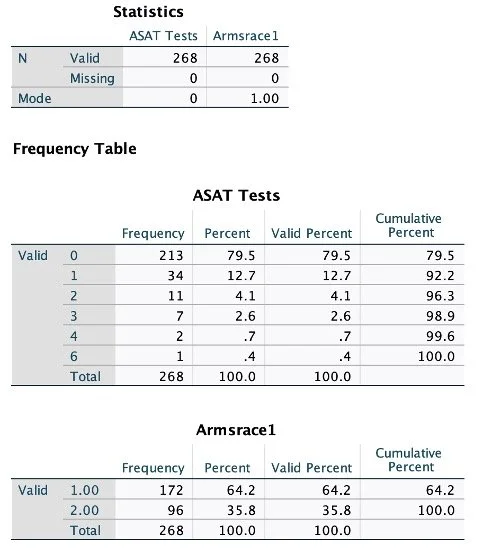
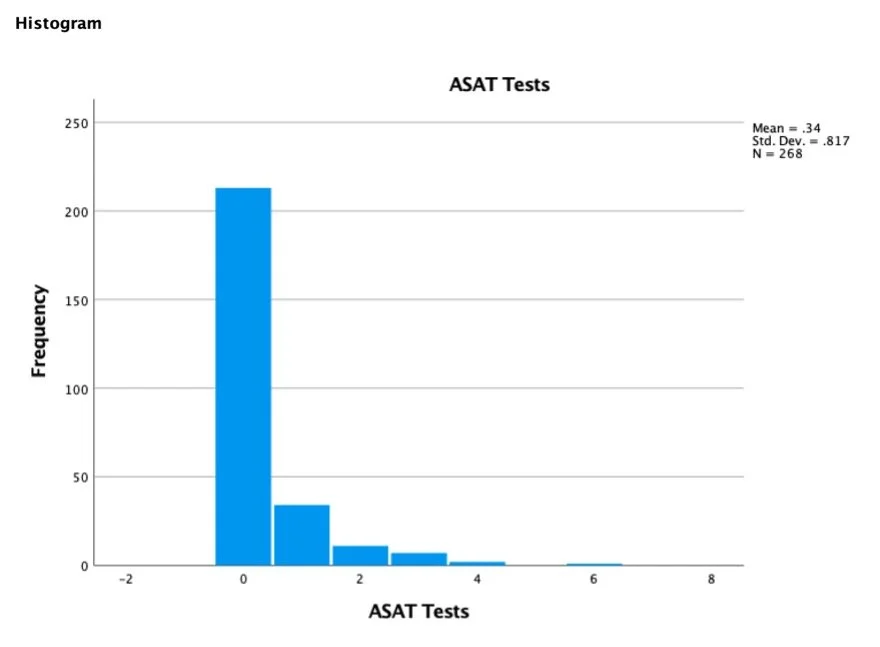
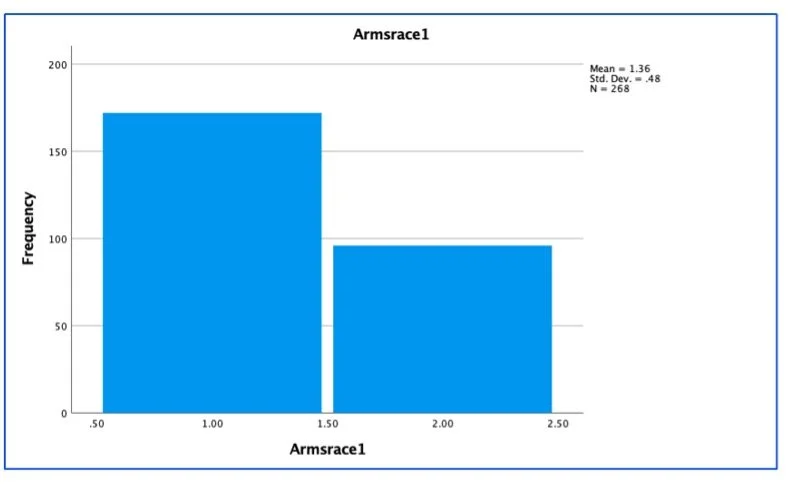
Fig. 2 (Frequency tables + Histograms x2) Show Descriptive Statistical Analysis of DV with Arms Race
b) DV & IV #2 Conflict
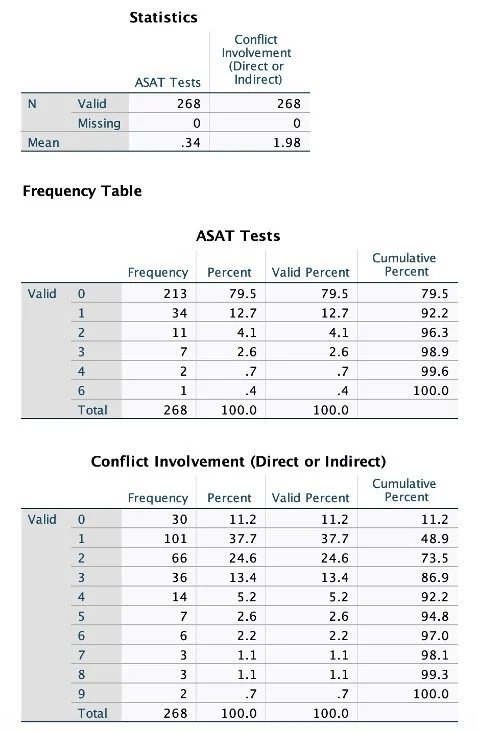
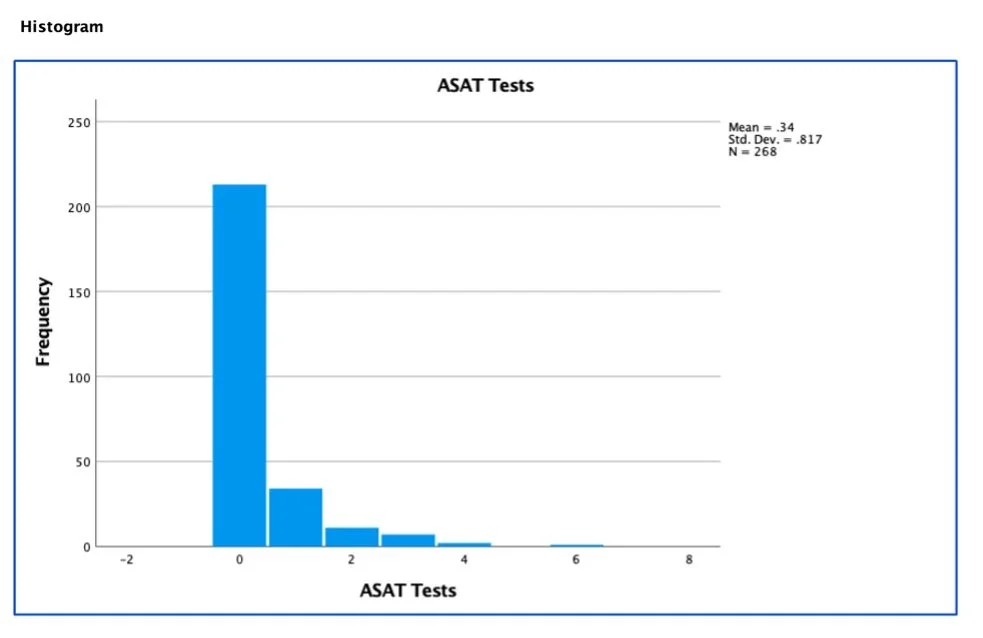
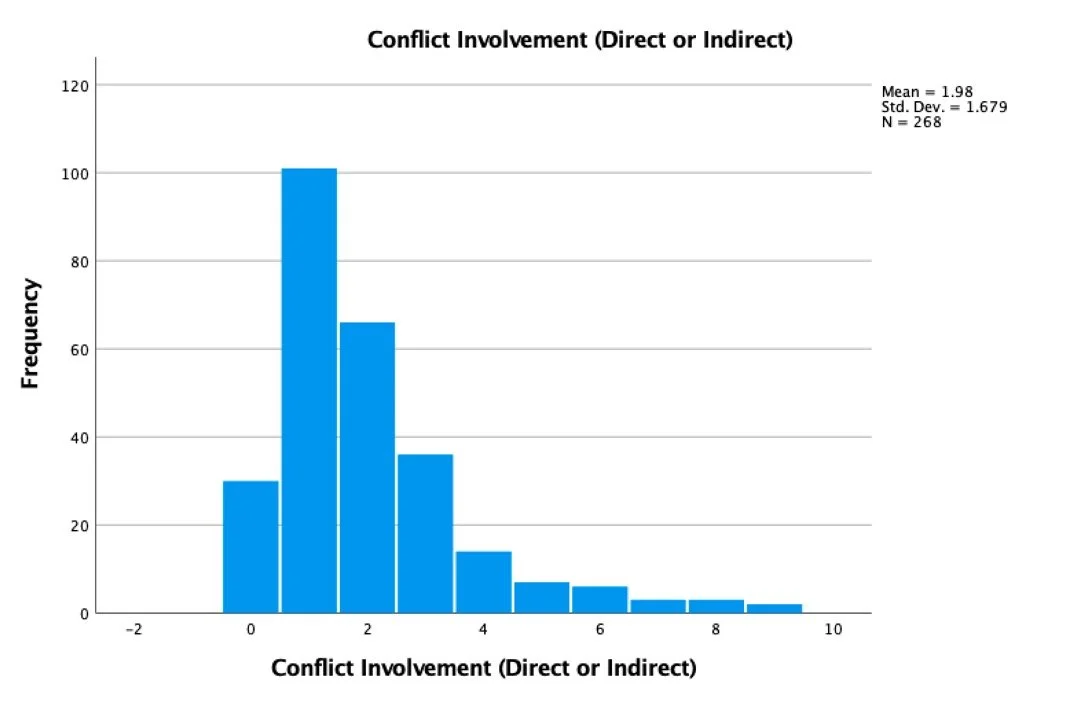
Fig 3: Descriptive Statistical Analysis of DV with Conflict
c) DV & IV #3 Defense Expenditure
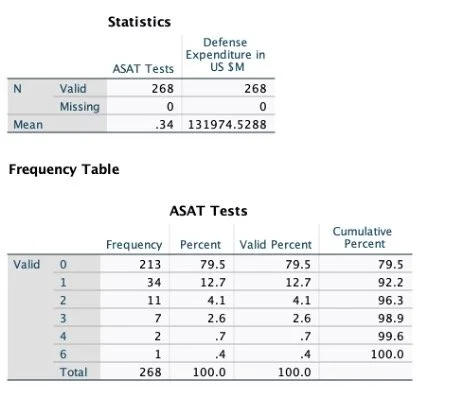
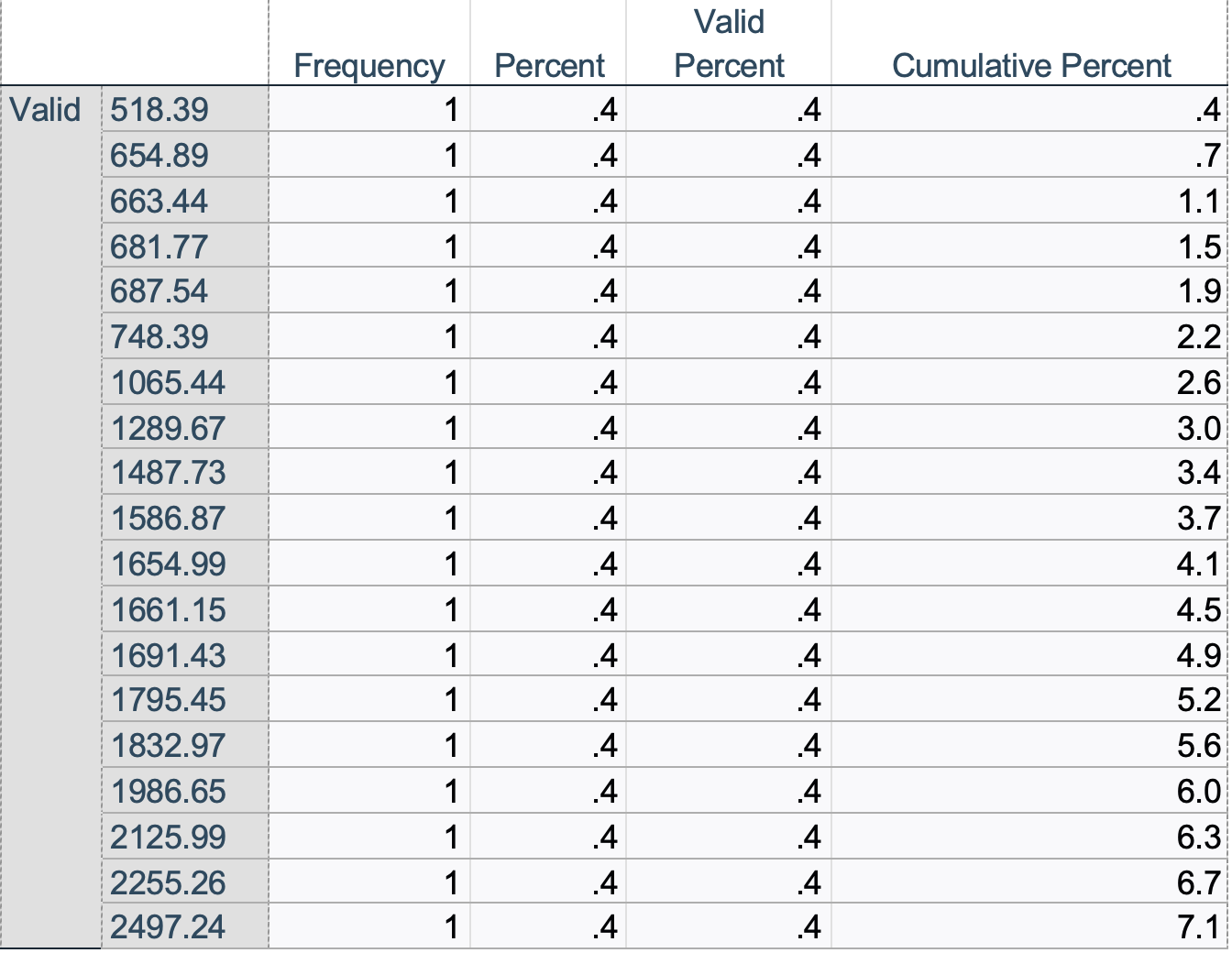
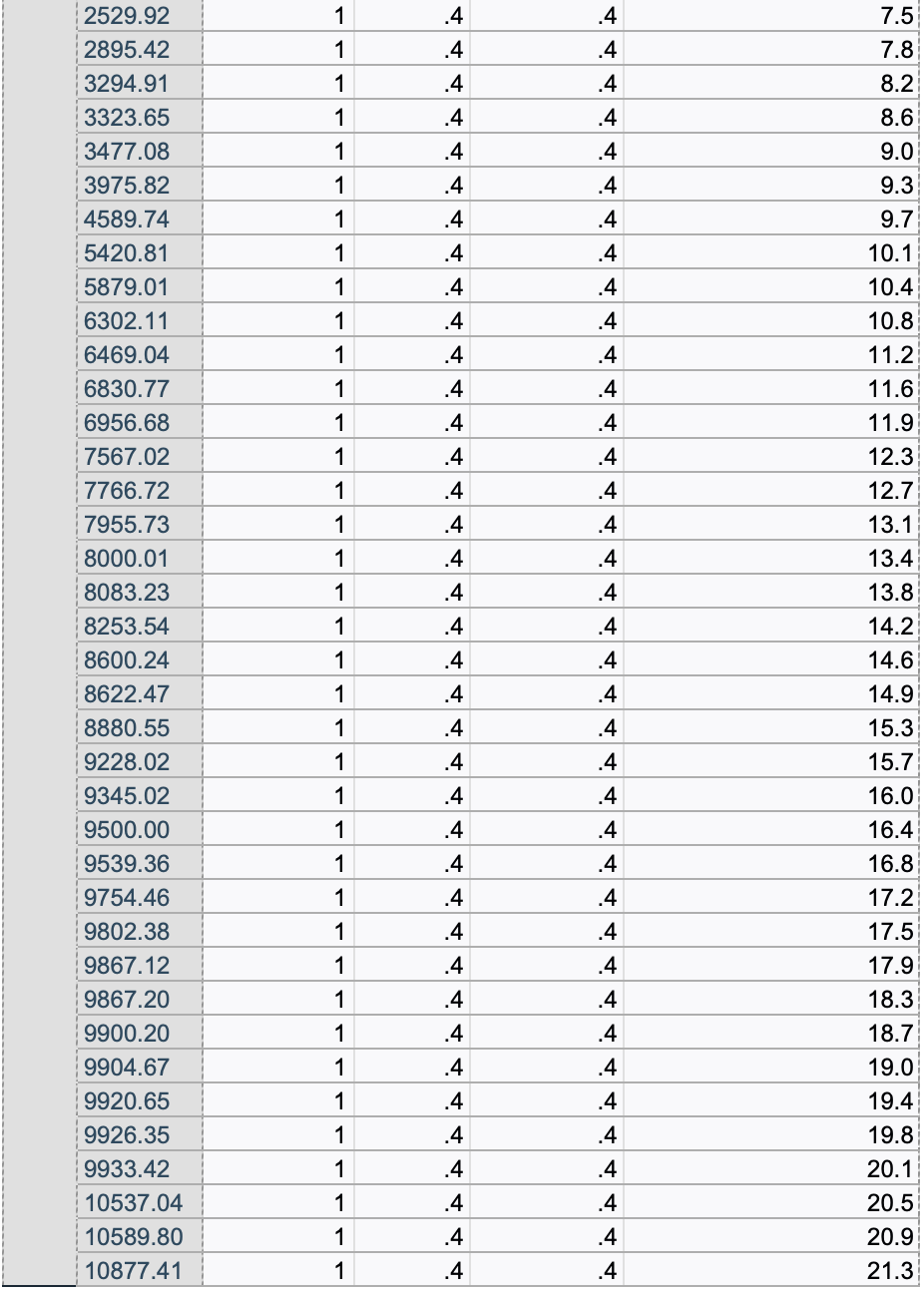
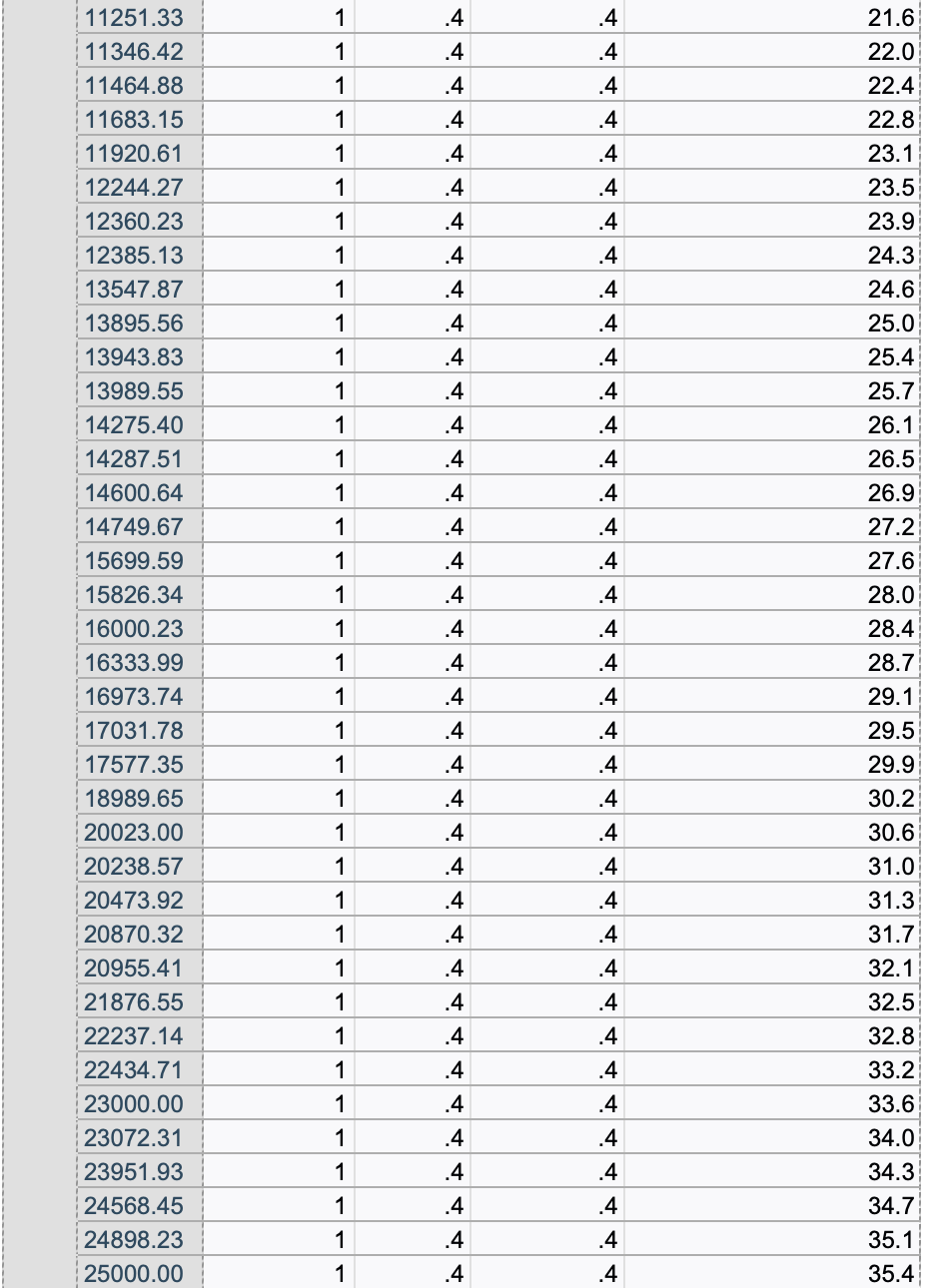
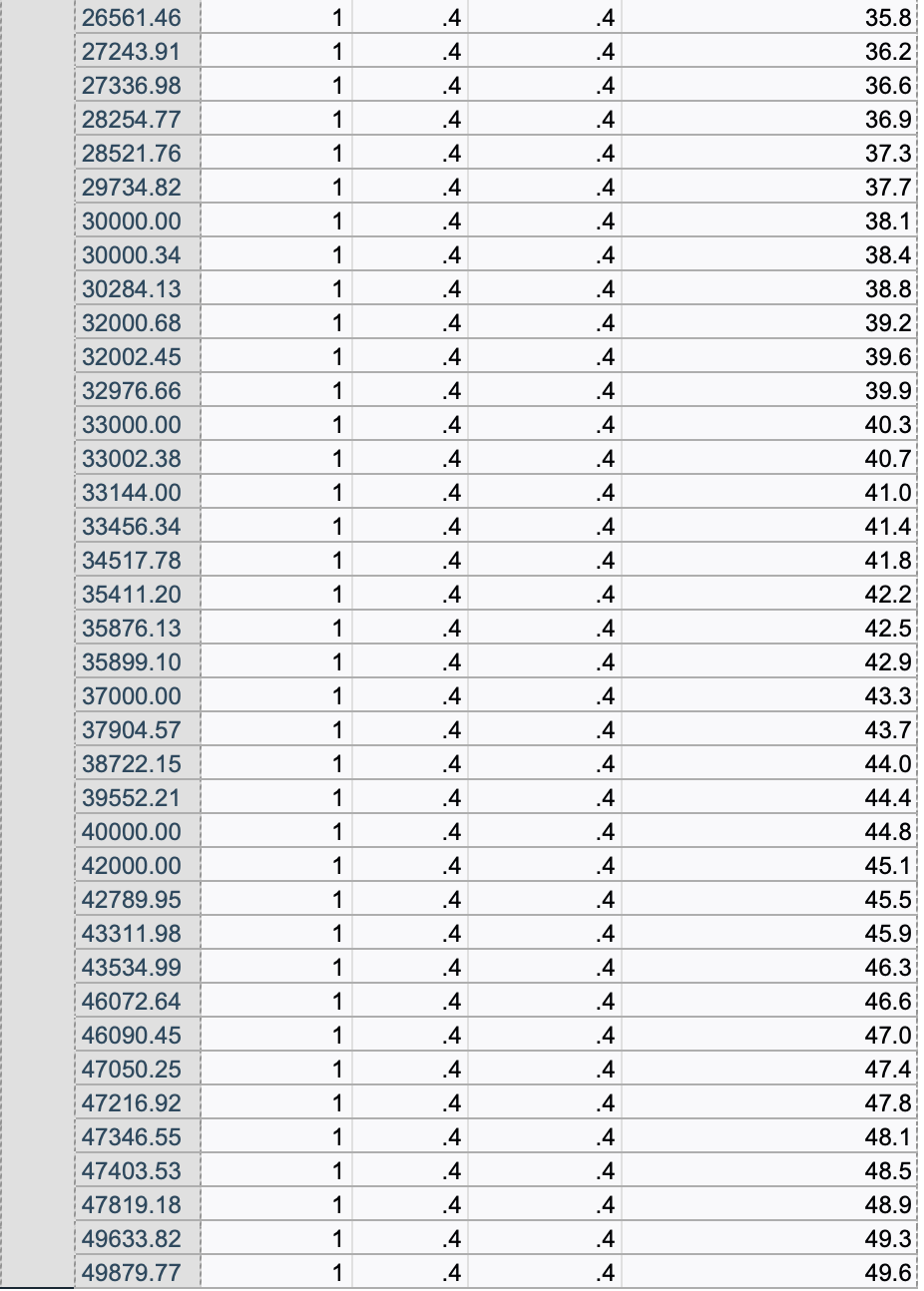
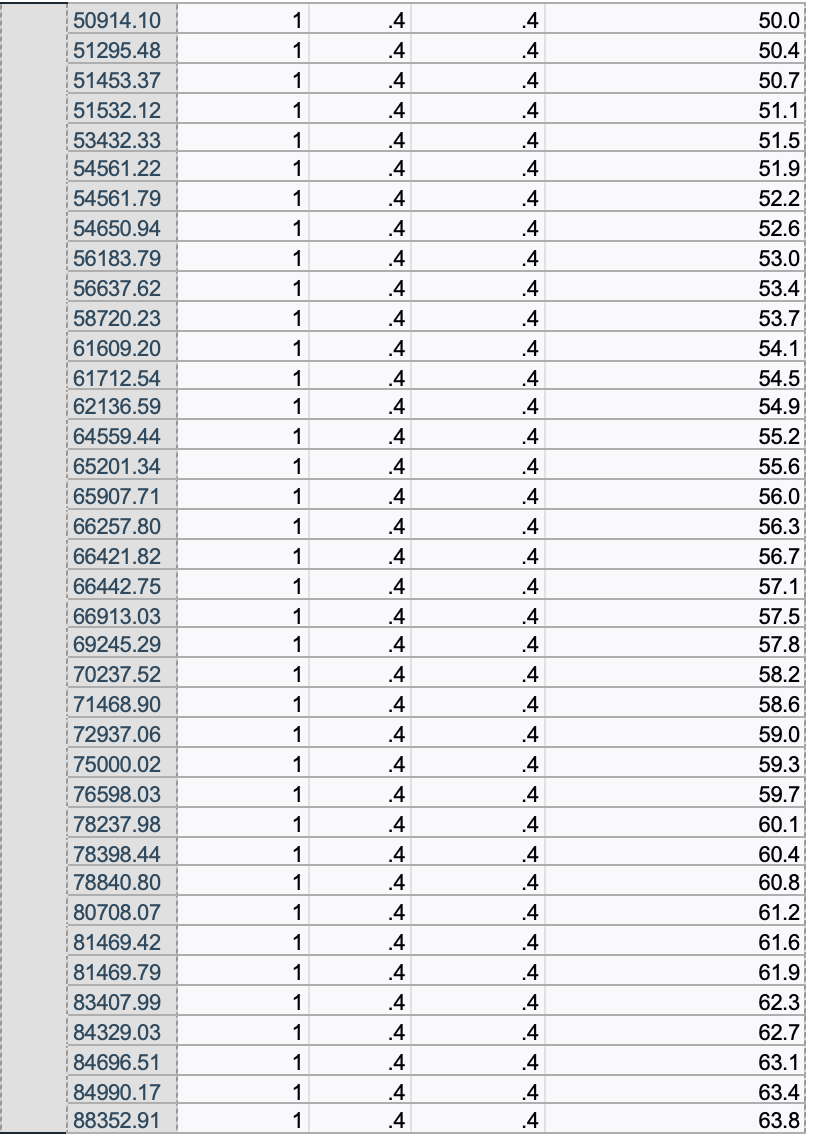
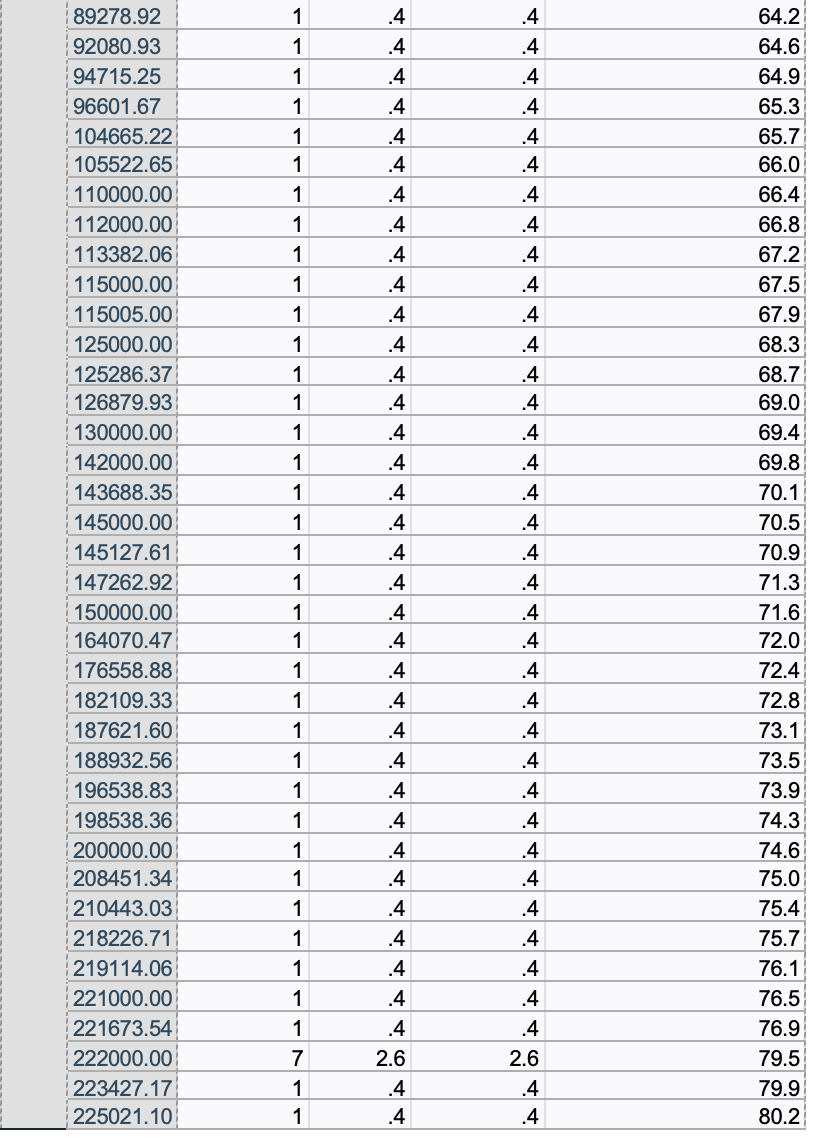
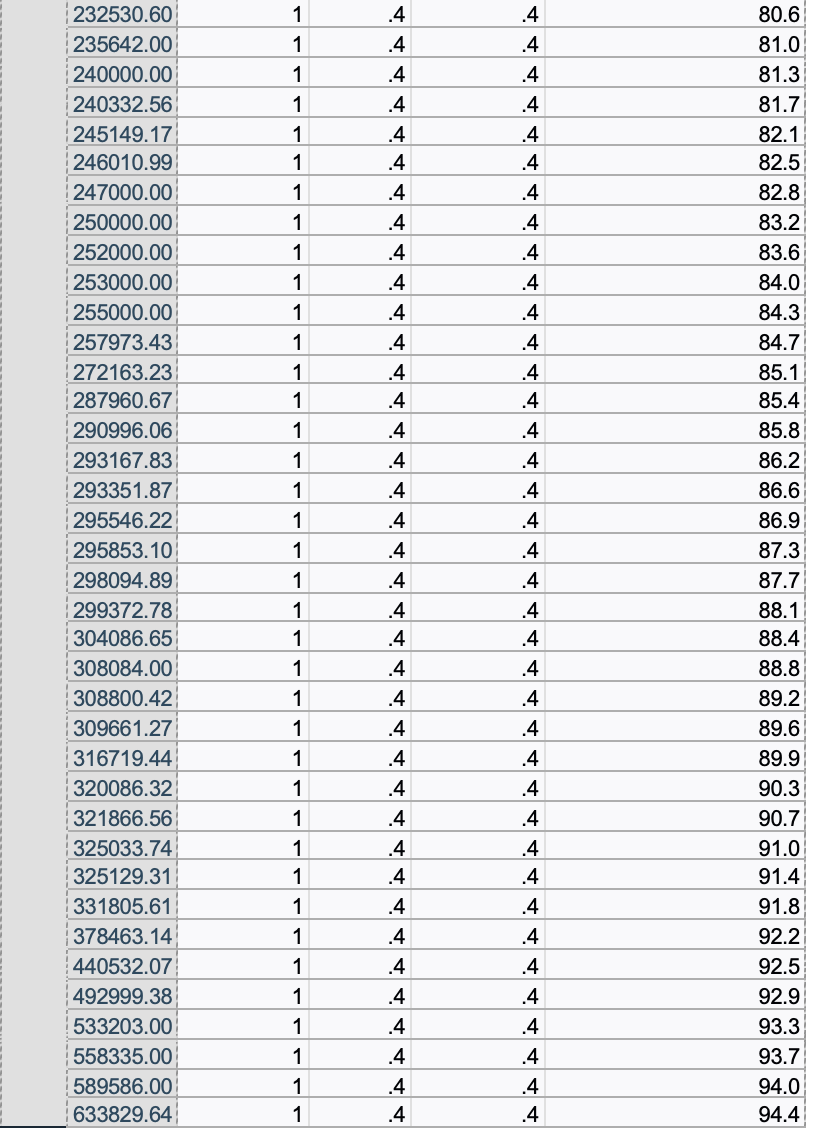
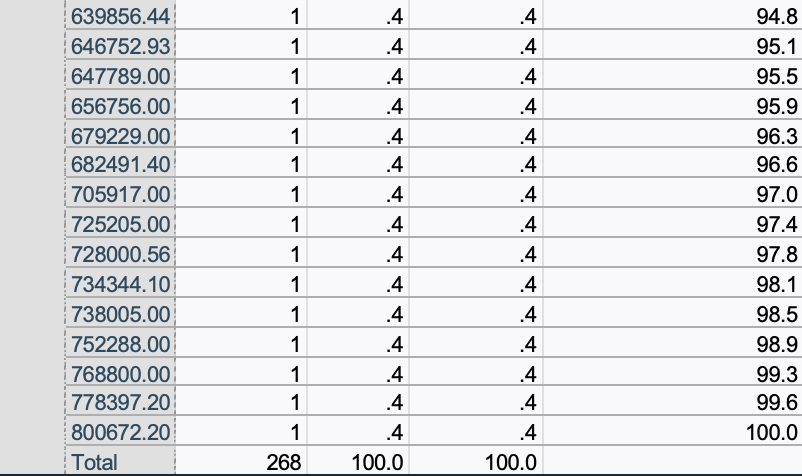
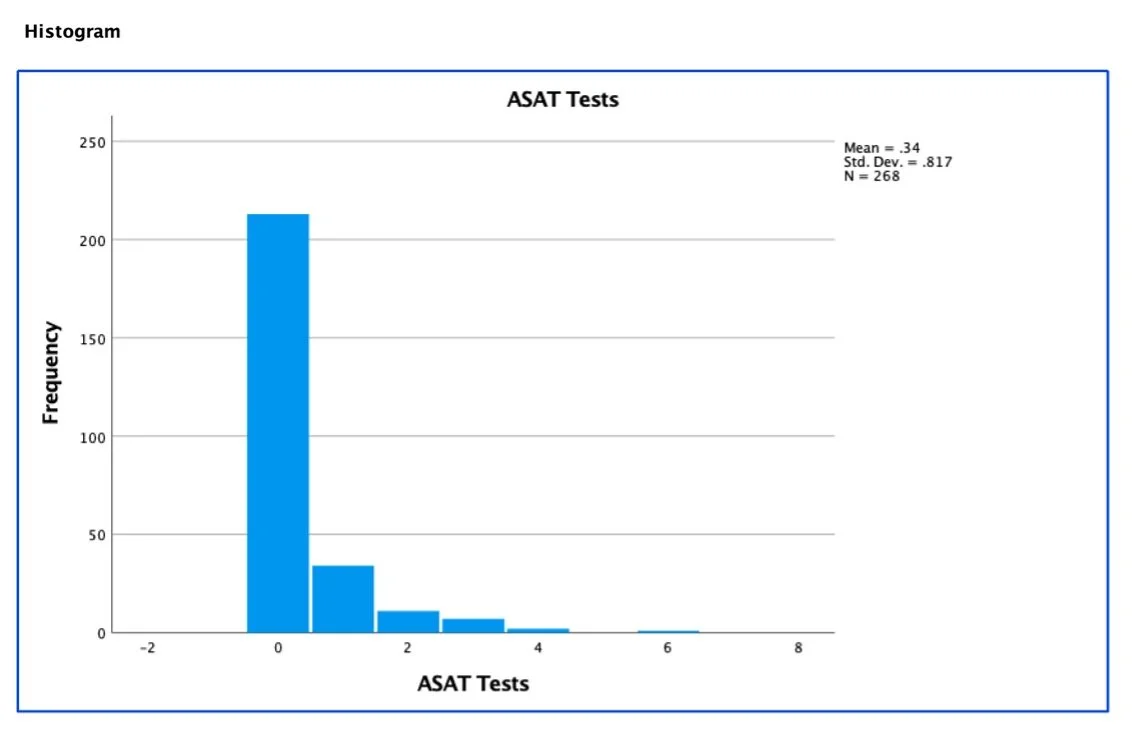
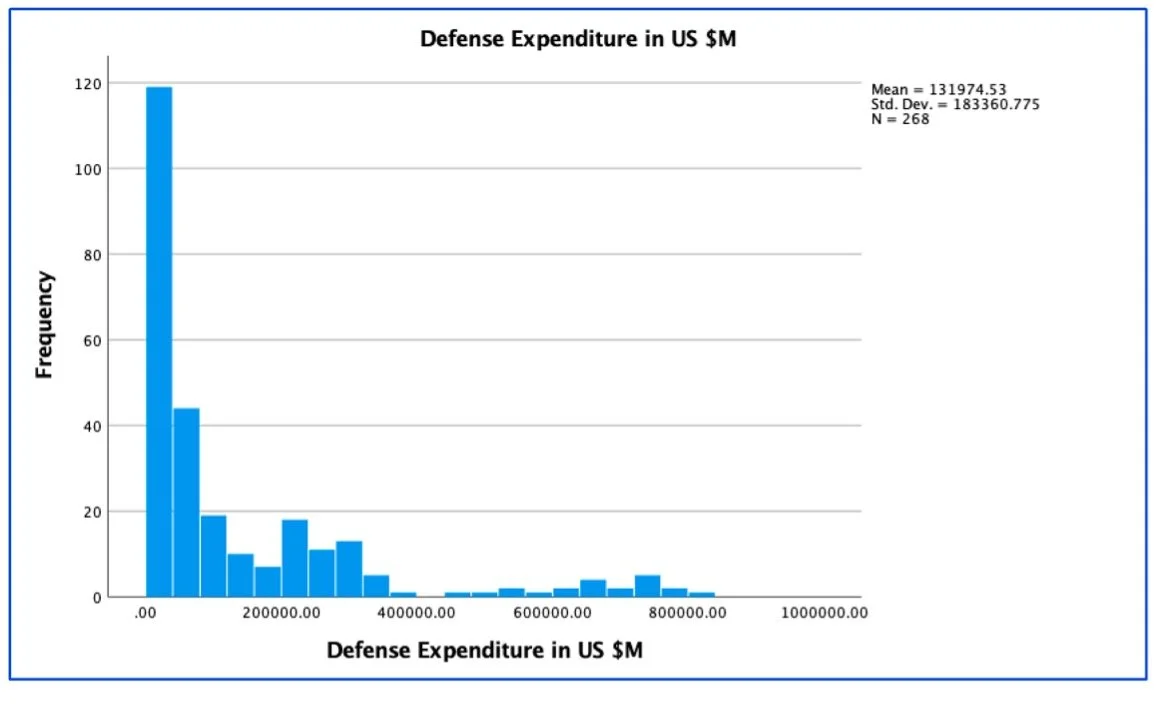
Fig 4: Descriptive Statistical Analysis of DV with Defense Expenditure
d) DV & IV #4 ASAT Capable satellites
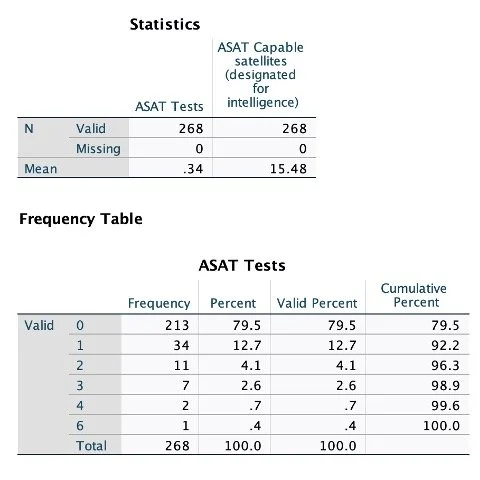
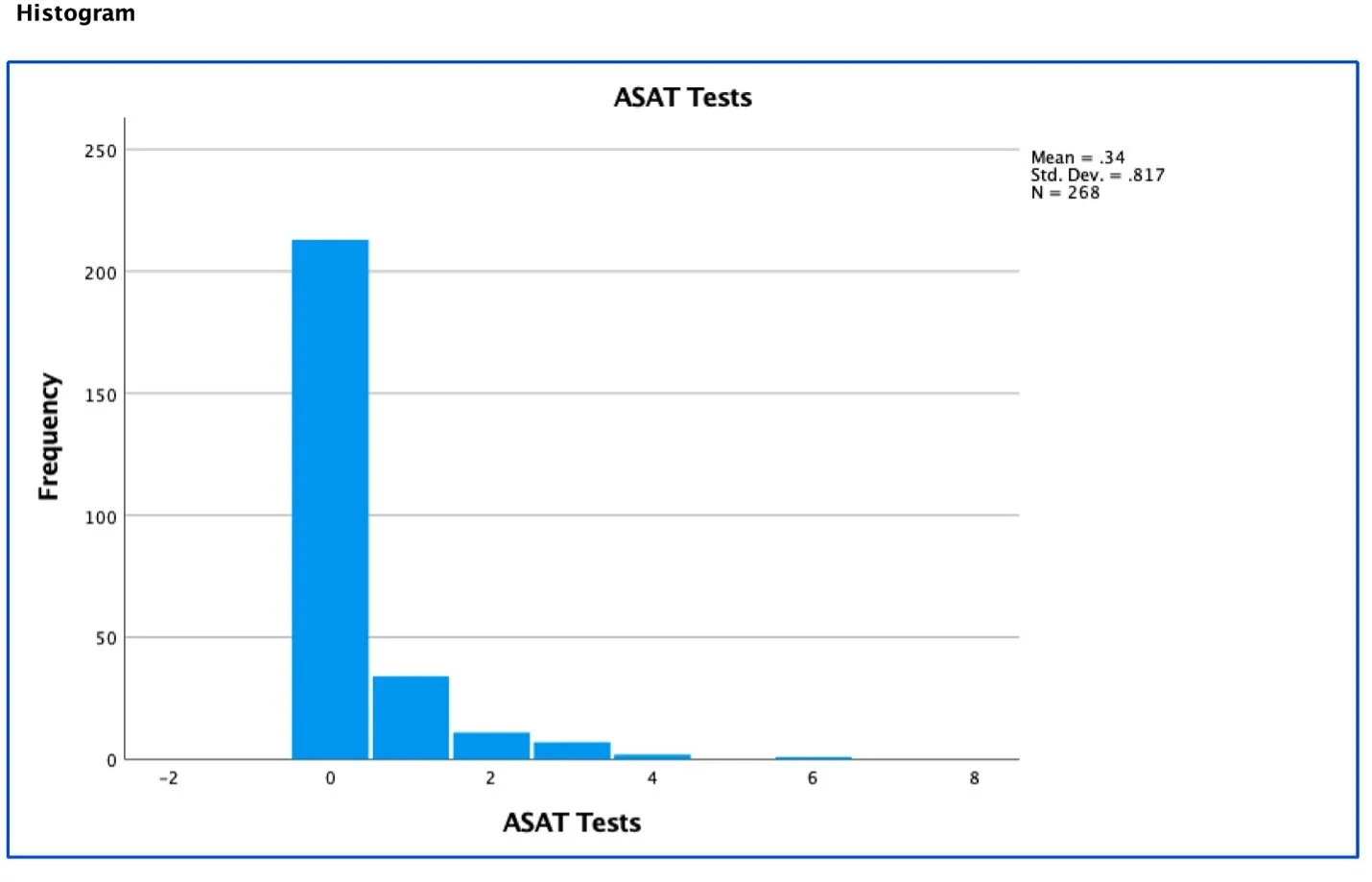
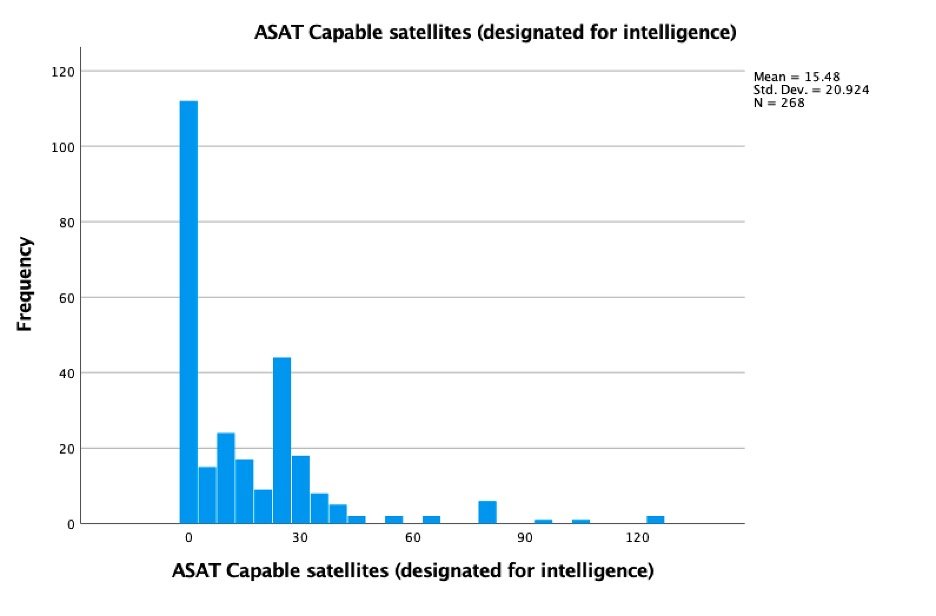
Fig 5: Descriptive Statistical Analysis of DV with ASAT capable satellites
e) DV & IV #5 Regime Type
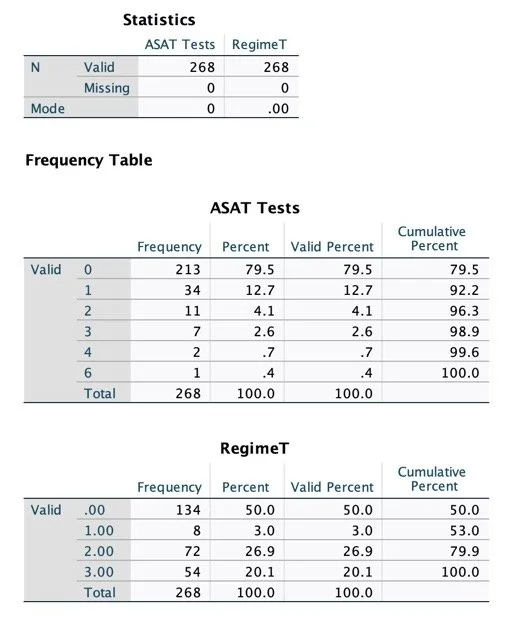
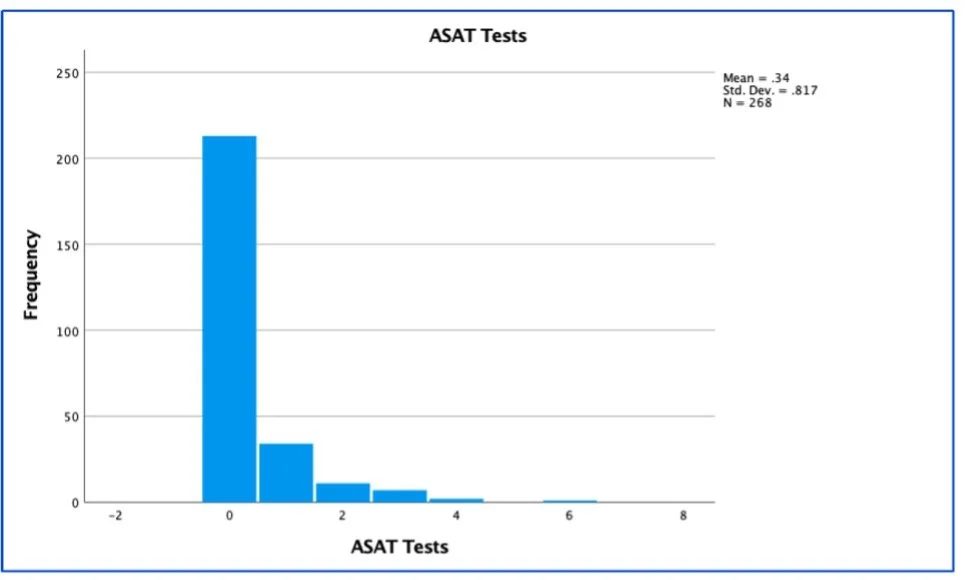
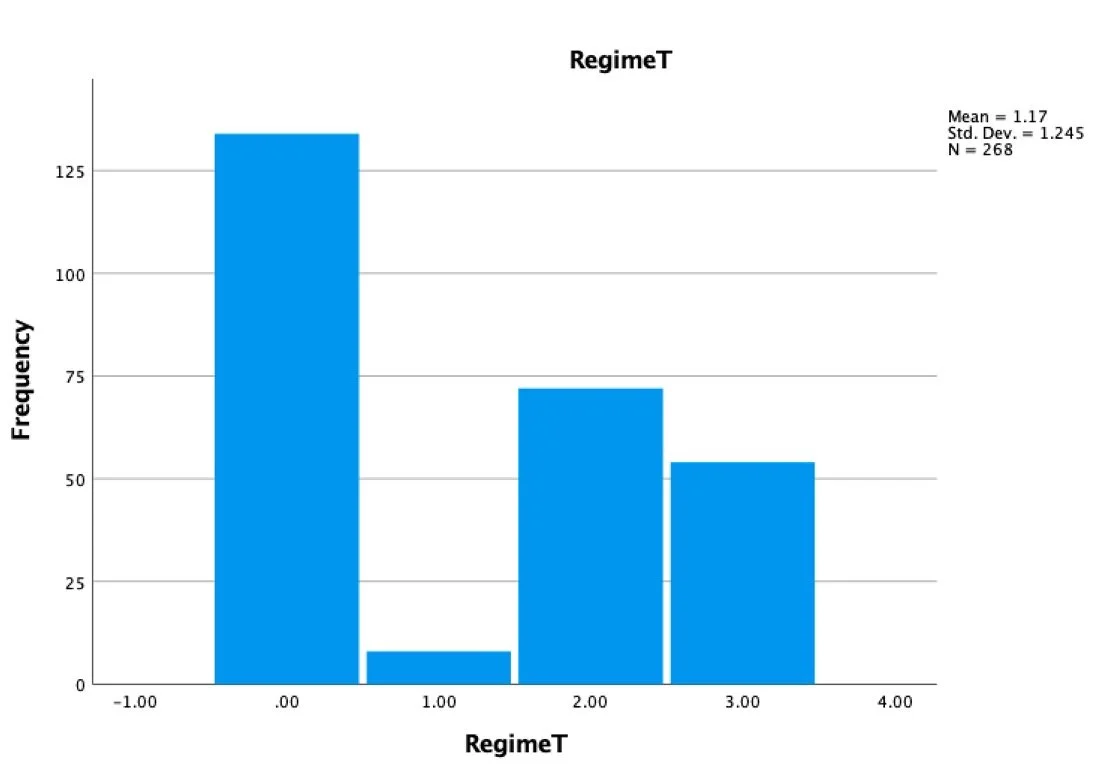
Fig 6: Descriptive Statistical Analysis of DV with Regime Type
2.Bivariate Hypothesis Tests
a. Correlation coefficient has been performed on variables: Conflict, Defense expenditure, ASAT capable satellites, Arms race and Regime type with the following hypothesis:
Hypothesis 1: Conflict and ASAT test frequency should show a positive correlation; increase in conflict should also mean an increase in ASAT test frequency
Hypothesis 2: Countries with more defense expenditure should conduct more ASAT Tests.
Hypothesis 3: Countries that have more ASAT capabilities should show an increase in ASAT Test frequency.
Hypothesis 4: A country being involved in arms race at any point should also show an increase in the ASAT tests conducted by that country
Hypothesis 5: Regime type and ASAT test frequency should show a correlation; some regimes such as closed autocracy are more likely to test ASATs compared to others
Results:
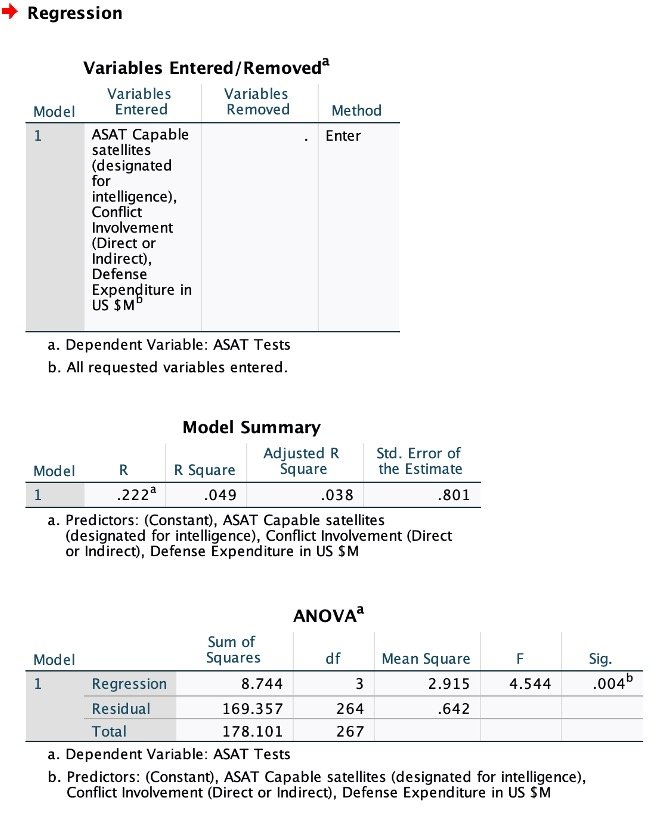
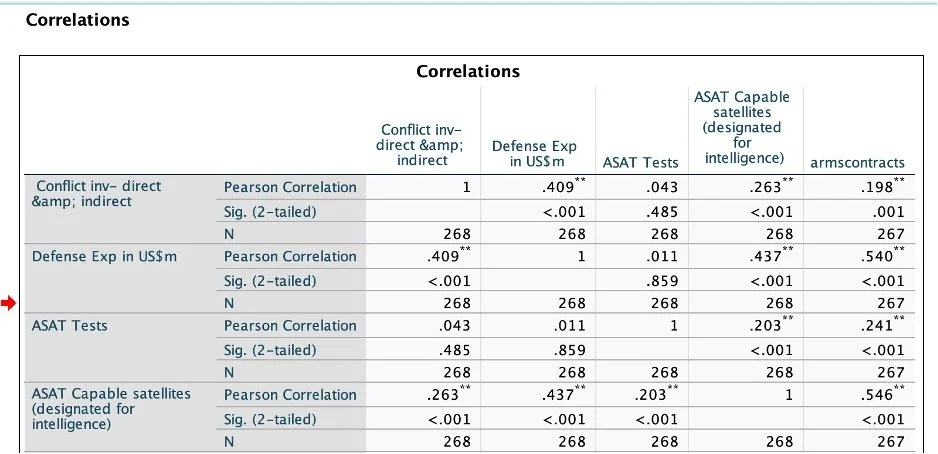
Bivariate Test of DV with Conflict, Defense Exp. And ASAT Capable Satellites
a. Arms Race and Regime Type: Difference of means
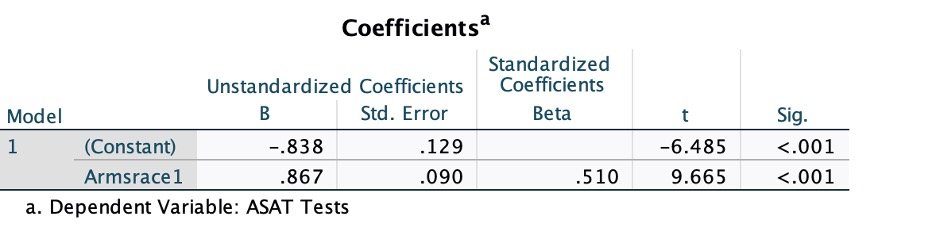
Bivariate Test of DV with Arms Race
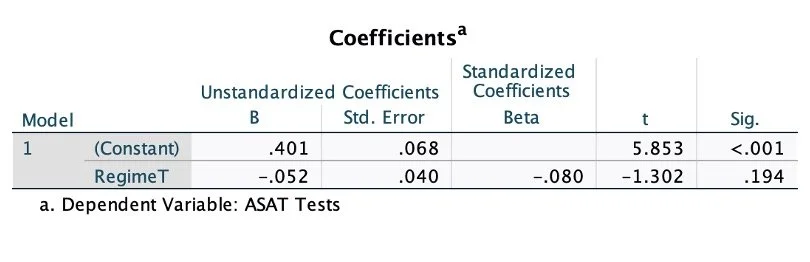
Fig 9: Bivariate Test of DV with Regime type
Interpretation:
1. In case of conflict, the p value is more than 0.05, therefore null hypothesis cannot be rejected.
2. In case of defense expenditure also, the p value is more than 0.05, therefore null hypothesis cannot be rejected.
3. Interestingly, for ASAT capable satellites the p value is less than 0.05. Therefore, null hypothesis can be rejected, and a positive correlation is established.
4. Arms race here is used a proxy for security dilemma. The p value is less than 0.05, therefore the null hypothesis can be rejected, and correlation is established. Furthermore, b = 0.867 indicating a positive correlation. This essentially proves the theory of security dilemma being positively correlated to increasing ASAT tests by these countries.
5. In case of Regime type, p value is more than 0.05 therefore, null hypothesis cannot be rejected.
Difference of meansfor Arms race
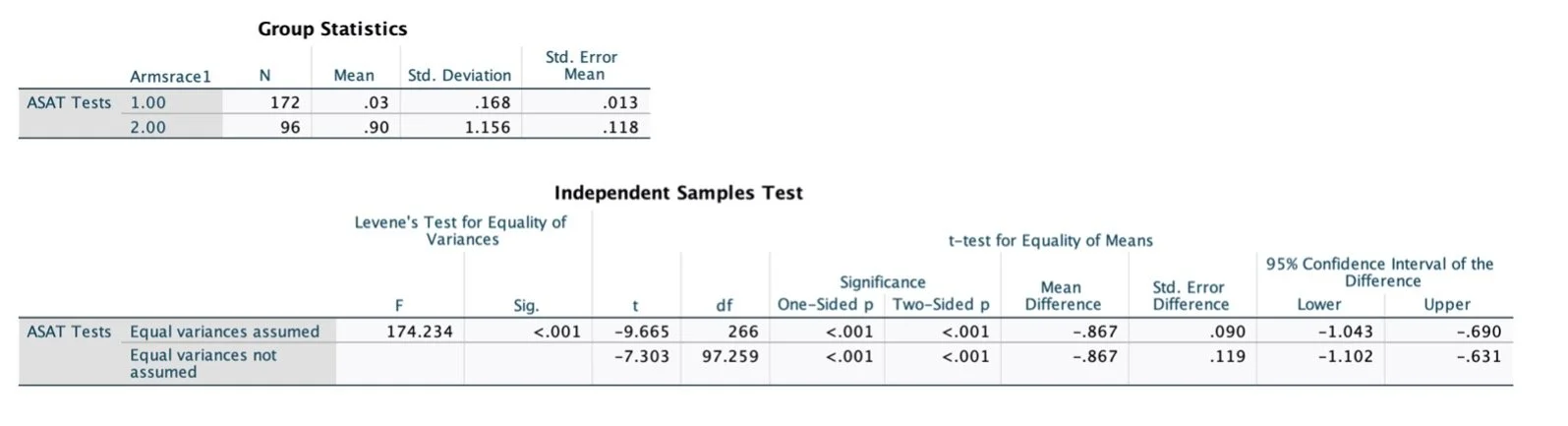
Difference of Means test for Arms Race (Yes=2, No= 1)
Interpretation: The mean for “Yes” is higher meaning the existence of arms race is significantly correlated to a country conducting more ASAT tests. This further proves the theory for this study.
3. Multivariate Analysis
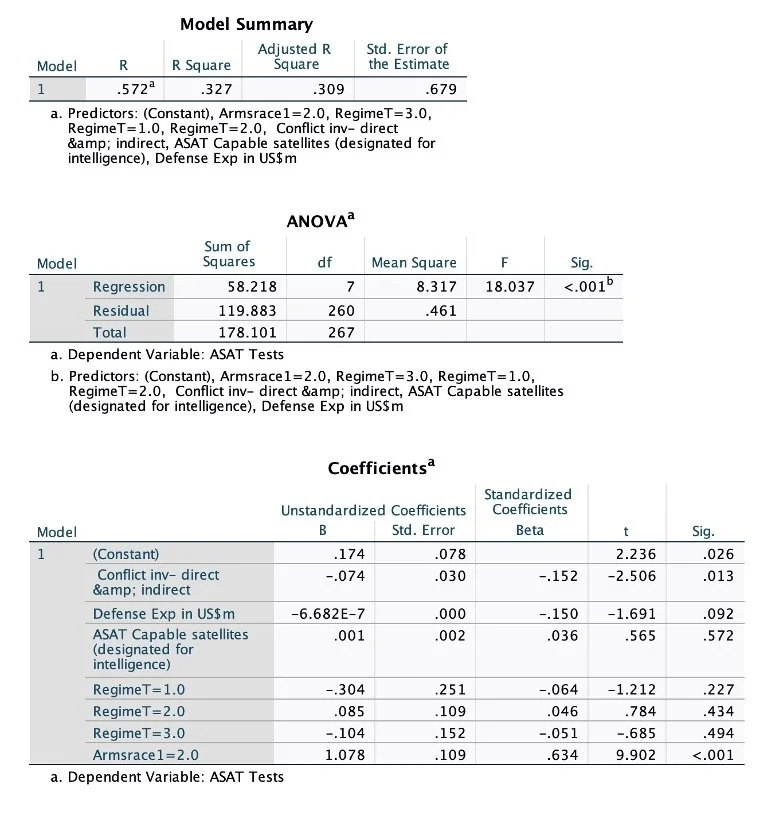
The multivariate analysis presented above, shows that:
1. A country’s involvement in direct or indirect conflict at a given point in time is correlated to the number of ASATs it tests, but negatively, meaning one-unit increase in conflict involvement is predicted to lower ASAT test frequency by 0.074 tests.
This is an odd result by rationally; conflict should ideally increase the number of ASAT tests in a country. This evidences that ASAT tests are not conducted during active wars but in their absence, pointing to an inclination towards the hitherto intent of using ASATs for gathering information to win wars.
2. There seems to be no correlation between defense expenditure of a country and its ASAT testing, strengthening the idea that ASATs are tested not as a result of long-term planning. Rather, the decision to test an ASAT may be shaped by external forces such as other countries testing them and therefore threatening the security of vulnerable nation-states.
3. Perhaps the most intriguing find is the lack of correlation between the existing ASAT capable satellites in a country and its ASAT test frequency. Logically, if a country has more ASATs, it should want to test them more to project strength. The fact that this is not the case also points towards a possible favorite type of ASAT: the non-kinetic. Since these ASATs can be designed to behave like any other satellite on the surface and be placed in orbits for commercial or exploratory purposes, it is in the interest of their host countries to not disclose them as non-kinetic ASATs and gather strategic information through hacking for as long as possible. They may be configured into a kinetic satellite remotely, when needed.
4. Similarly, regime type also shows no correlation with ASAT tests which rules out the assumption that democracies may be more responsible in launching such weapons than autocracies.
5. The final and the most important find is the strong correlation between arms race and ASAT tests. The confidence interval for this, stands at 99%. The analysis clearly shows that countries involved in an active arms race are predicted to increase ASAT test frequency by 1 ASAT test. Since arms race was the proxy for security dilemma in this study, this finding proves the theory of security dilemma being the driving force behind the increasing arms race in space.
Amongst all factors assessed, security dilemma plays the most significant role in fueling the arms race to space. This also proves the Karmic Cycle of Security Threat (Fig 1) to be true for these set of countries. After Soviet Union, it was USA that perpetuated the arms race further which started a chain reaction with more countries joining and the situation becoming such a real, global threat. At the time, USA only had one country to worry about. Today, it has many, the most prominent one being China. It is ironical that China is able to challenge USA’s hegemonic power as a result of the chain reaction started by USA itself. The spread of technology has enabled more countries to become a threat to one another and the trend of ASAT testing not being a result of war or access to more resources, makes it tremendously difficult to predict its future use or prevent an attack.
The use of ASAT is clearly detrimental to global security but also to society at large. As more countries join the race, space defense will become a priority for national governments. Investments from education, infrastructure, health care and other important public good will be pulled to meet the need for space weapons. While developed countries will suffer the consequences of this in terms of unfavorable currency changes, the growth in developing nations will be significantly hindered and could even cause severe inflation in these regions. The predictions about unchecked growth of artificial intelligence and technology, overall have already started pouring in and all of these indicate the onset of a new industrial revolution. This time, it could lead to colonization by the digitally superior. East India Companies of the past could be replaced by Space X and Google’s of the modern times. Besides, the ASAT development is still in the testing stage and misfiring accidents could cause damage to innocent communities.
Conclusions & Recommendations
While the findings may be disturbing in terms of global security, discovering the root of the problem is the first step to solving it. The only way to reverse the effects of the Karmic Cycle is to remove the rotten apple from the basket i.e., a total international ban on the testing and use of anti-satellite weapons. However, this is easier said than done.
The race to conquer space picked up pace, a few years ago and the scope of threat is still being assessed which means there is also a lack of concrete legal framework for the shared use of outer space. The Outer Space Treaty, adopted by the UN General Assembly in its 1962 resolution and enforced in 1967, provides for a harmonious use of space in the “interest of all countries” to “benefit mankind”[i]. The well-known issue with the Outer Space Treaty is that it does not specifically forbid deliberate satellite assaults or ban ASAT weapon tests that endanger other space users. The treaty prohibits the possession of orbiting nuclear weapons but does not forbid other types of space weapons. This gap can be exploited with the increasing interest in ASAT technology.
There is a need to amend the treaty, or develop a new, more comprehensive international framework to ban the use of ASAT or any similar weapon in the future in the interest of global security, protection of privacy, prevention of space debris in the orbits and proactively prevent other hazards that may stem from the use of anti-satellite weapons.
[i] UN Office for Outer Space Affairs ‘Treaty on Principles Governing the Activities of States in the Exploration and Use of Outer Space, including the Moon and Other Celestial Bodies’ available at unoosa.org
Limitations
Anti-satellite weapons are an emerging topic of interest in international security. A common issue with relatively newer fields is collecting data. However, in this case, the issue was amplified for various reasons:
i. ASATs are the best kept secrets of various defense and intelligence agencies. This means that there is no official public record of how many ASATs exist or existed in the past. Moreover, on the surface, ASATs function like any other satellite for commercial or exploratory purposes. Certain special features make it a weapon, but these features are rarely made public for internal security reasons. Therefore, in order to distinguish regular satellites from ASATs, I studied the features of ASATs with the help of Indian Space Research Organization (ISRO) and applied that knowledge to the global satellite database from Union of Concerned Scientists (UCS).
ii. There is a lack of official data on defense expenditure for Soviet Union. Most recognized databases such as the World Economic Forum, UN or Secure World Foundation only have data going back to 1990s.
iii. Owing to lack of time and resources, this study is restricted to 5 countries. While these countries make an interesting study as a group, generalizations of the proven theory are not possible. Moreover, some tests are not perfectly suited for this study and with more time at hand, better results may be derived by studying specific years in countries, creating dummy variables and analyzing them with a more narrowed focus.
Future Research
This study is just one of many to follow in the realm of space security. The United States recently, under the Biden administration, banned the use of ASATs in 2022[ii]. Interestingly, this announcement came months after Russia launched destroyed one of its own satellites using an anti-satellite weapon in November 2021. This is the opposite of USA’s reaction to Russia’s Sputnik in 1957. However, it is also important to note that while some US allies joined the ban, many countries including India, Russia and China did not. The ban has no meaning if it is not universally accepted. Yet, it will be interesting to see if there is a decline in ASAT testing in the future owing to this ban and on the rising security dilemma in countries.
Secondly, due to the sample size limitations of this study, global generalizations cannot be made about the theory of security dilemma fueling arms race. If this set of countries is expanded to include all countries involved in a space arms race and are analyzed in a similar fashion, a more concrete, widely applicable theory can be produced.
[ii] Kimball, D.G. (2022) ‘US Commits to ASAT Ban’. Arms Control Association. Available at armscontrol.org
[1] Arms race is used as a proxy for security dilemma
[2] 1965 has been chosen as the start year for this study given that space race essentially started with Sputnik which was launched by Soviet Union in 1957.
[3] The variable identifies the political regime of a country using the Regimes of the World classification by political scientists Anna Lührmann, Marcus Tannenberg and Staffan Lindberg (2018).
Bibliography
[i] AL-RODHAN, N. (2018). THE INTERPLAY BETWEEN OUTER SPACE SECURITY AND TERRESTRIAL GLOBAL SECURITY. Harvard International Review, 39(3), 29–33. https://www.jstor.org/stable/26617360
[ii] Kessler, D. J., and Cour-Palais, B. G. (1978), Collision frequency of artificial satellites: The creation of a debris belt, J. Geophys. Res., 83( A6), 2637– 2646, doi:10.1029/JA083iA06p02637
[iii] Triezenberg, Bonnie L., (2017) Deterring Space War: An Exploratory Analysis Incorporating Prospect Theory into a Game Theoretic Model of Space Warfare. Santa Monica, CA: RAND Corporation.
[iv] Gottfried, K., & Lebow, R. N. (1985). Anti-Satellite Weapons: Weighing the Risks. Daedalus, 114(2), 147–170.
[v] Cordesman, A. H., & Kendall, J. (2016). Chinese Space Strategy and Developments. In Chinese Space Strategy and Developments (pp. 3–34). Center for Strategic and International Studies (CSIS).
[vi] Stourzh, G. (1953). Reason and Power in Benjamin Franklin’s Political Thought. The American Political Science Review, 47(4), 1092–1115.
[vii] Triezenberg, Bonnie L., (2017) Deterring Space War: An Exploratory Analysis Incorporating Prospect Theory into a Game Theoretic Model of Space Warfare. Santa Monica, CA: RAND Corporation. https://www.rand.org/pubs/rgs_dissertations/RGSD400.html
[viii] Peperkamp, L. (2020). An Arms Race in Outer Space? Atlantisch Perspectief, 44(4), 46–50.
[ix] Chow, B. G. (2017). Stalkers in Space: Defeating the Threat. Strategic Studies Quarterly, 11(2), 82–116.
[x] Al-Rodhan, N. (2018). The Interplay Between Outer Space Security and Terrestrial Gobal Security. Harvard International Review, 39(3), 29–33. https://www.jstor.org/stable/26617360
[xi] UN Meetings and Coverage (2021), ‘Approving 21 Drafts, First Committee Asks General Assembly to Halt Destructive Direct-Ascent Anti-Satellite Missile Tests in Outer Space’. 27th session available at press.un.org
[xii] Tzu, Sun. 2010. The Art of War. Capstone Classics. Chichester, England: Capstone Publishing
[xiii] UN Office for Outer Space Affairs ‘Treaty on Principles Governing the Activities of States in the Exploration and Use of Outer Space, including the Moon and Other Celestial Bodies’ available at unoosa.org
[xiv] Kimball, D.G. (2022) ‘US Commits to ASAT Ban’. Arms Control Association. Available at armscontrol.org
